Tuesday, 11 September 2018

Productivity Secrets Top-Level CEOs Would Rather Keep to Themselves

Ice freezing offices. Social media. YouTube. Fantasy football leagues. There is one thing all of them have in common – they are all primary suspects for causing your productivity at work to plummet. Even the top-level CEOs fall under temptation to watch the latest cat video uploaded on YouTube. The difference is, they found a way to overcome these bad habits with some simple hacks and tricks.

“Productivity is never an accident. It is always the result of a commitment to excellence, intelligent planning, and focused effort.” –Paul J. Meyer.

Your environment cannot always be controlled, but you can control what you get accomplished. In addition to that, you can always learn from others, mimic their behavior, and discover how they get things done more efficiently. Certainly, there are some easy ways to accomplish more, like turning off your smartphone or blocking access to YouTube.

However, these are all small things that wouldn’t get you far enough. There are far better ways to become the best version of yourself at work. And the best thing is that you can learn these productivity skills by following the good examples of some of the world’s most successful people.

Below are some productivity secrets top-level CEOs swear on.

Develop the growth mindset

You should never be satisfied with where you and your company are right now. You should know that there is always room for improvement in every area. There is always a better and faster way of doing something.

Elon Musk once said: “You should take the approach that you’re wrong. Your goal is to be less wrong.”

And that is growth mindset at its finest.

This skill separates successful people from everyone else.

When your mind is trained in such a way, you know that anything is achievable as long as you put enough effort into it. And if by any means you fail, don’t take it too personally. Instead, approach the problem from a different angle until you get it right.

Use technology for productivity, not for the distraction

use technology

We bet that now you are saying: “What are they talking about? In the beginning, they said that technology is credited the most for all the distractions at work.”

Well, yes and no.

Technology can be of great help and top-level CEOs know that. There are plenty of mobile apps that can make their lives a lot easier and stress-free, especially for the ones who travel a lot. Business apps allow them to stay productive and work from wherever they are. They can basically bring their whole offices with them through a device that fits perfectly into their pockets.

Therefore, we decided to share with you one very interesting interactive infographic created by the people from Cometdocs. It will show you what mobile apps can completely and effortlessly replace traditional office equipment. Just click on the blue dots in order to find out what mobile app replaces the selected office element.

INFOGRAPHIC SHOULD BE PLACED HERE

See Also: 5 Top Technology Trends That Will Shape 2018

Schedule your day around when your brain is at its finest

What we mean by this is you should schedule your day around when your brain is at the peak of its power. Postpone all brainless and unimportant activities until it is fatigued.

First of all, there is one question you have to give a precise answer to: “When is my brain at its peak power?”

Let’s say it is from 7 to 11 a.m.

During that period, you should only focus on your most challenging tasks. Your schedule should be blocked off so you could have as little distractions as possible.

What about after 11 a.m.?

Well, continue with your everyday work, respond to emails, do those charts or call people back.

Basically, your mornings or whenever your concentration is at its best should be kept for important stuff and that time should be non-negotiable. Only afterward should you start dealing with your everyday work.

By following this little hack, you will achieve in 6 months what other people wouldn’t achieve in 2 years!

Set limits for everything, meetings, emails, tasks, you name it

set limits

There is no time for wasting time – see what we did there?

Previously, we talked about how you should plan your day around according to your level of concentration. And now, we will let you know how you should manage your everyday work aside from those prime time hours.

Top level CEOs know how to make the most out of every minute and that is easily achievable by limiting your everyday tasks.

For example, you could limit your meetings to 1 hour, 20 minutes for presentation and 40 minutes for the discussion. Nothing less and nothing more.

Or you could set the limit for the length of the emails you send. That way, you could respond to every work-related email you get and save time because you are keeping the responses short. Basically, every task can be limited in some way and you should definitely take advantage of it.

Replace “but” with “and”

Whenever you say “but” in a conversation, you are indicating that everything that you said before the “but” is not relevant. People are subconsciously trained to immediately forget everything you said before the “but”.

For example, someone may say: “I completely agree with everything you said and did, BUT here is what I think.” Have you felt it? Like your brain is preparing to fight.

Replacing “but” with “and” completely changes the tonality and dynamic of communication and this really works. People feel more appreciated and are likely to be open-minded to new ideas and suggestions when you approach them this way. Try it the next time you want to suggest something, you won’t regret it.

Final thoughts

You may try all of these productivity secrets at once or one tip at the time. The case is, all of the top level CEOs focus on doing several things really well each day rather than doing a hundred things poorly.

We truly hope you enjoyed reading this article and we would love to hear about the hacks you use to stay productive in the comments below.

The post Productivity Secrets Top-Level CEOs Would Rather Keep to Themselves appeared first on Dumb Little Man.


from
https://www.dumblittleman.com/productivity-secrets/

Monday, 10 September 2018

How To Take The Perfect Selfie (With Or Without AR)

For millennia, people have sought after the perfect method of capturing one’s likeness. From cave drawings to royal commissioned portraits to tintype photography, our perceptions of self are constantly changing. And now, a lot of people are focused on how to perfect selfie.

The Evolution of Selfies

As photography quality grew over the 19th and 20th century, so did people’s fascination with human faces. Photography quality improved so much in fact, that artistic trends began shifting in the opposite direction. Surrealism and expressionism boomed in popularity and inspired some of the most famous pieces of artwork known today.

The imaginative likeness of humanity through artwork, juxtaposed against the solemn nature of black and white photography captured the imagination of people everywhere. It ushered in a new era of not only how we see the world around us, but how we see ourselves. The idea that a self-portrait could be anything we wanted it to be. It was not just an expression of physicality, but of our very essence.

Today, we are expected to take over 25,000 selfies during our lifetime. By 2015, 95% of millennial had taken at least one selfie. With an average posting rate of 9 selfies a week, it’s not a surprise we see them as often as we do. Social media is the hub of selfies, but not all platforms are equal.

The Start of AR Selfies

Snapchat pioneered the world of AR selfies when the quintessential Rainbow Barfing filter rolled out in 2015. Users were blown away by the detail, tech, and the sheer absurdity of these augmented reality gems.

Using facial tracking technology, users were able to filter over their own features in real time. Adapting to movements and even more than one face in the frame, this feature boomed. It made Snapchat the selfie hub. More than one in three people who use Snapchat do so primarily to take, send, and save selfies. In comparison, only 4% of posts are solo selfies in Instagram.

In a way, these creative filters harken back to the days of when the extremes of human imagination were made real through art and early photography. Long gone are the days when selfies were considered a vain and attention-seeking practice.

Today, they are vital pieces of self-expressionism, especially among social media users. No matter how far we edit our selfies, we know it still remains an image of ourselves.

While there is no formula to the “perfect” selfie, there are general guidelines, tips, and tricks that many veteran selfie-takers can agree on.

Popular opinion consensus has decided that selfies are a good thing now, and the more creative and personality-filled, the better. After all, what’s more unique than a photo of one’s own face?

It’s only fair to take advantage of the seemingly endless online resources for selfie augmenting, whether it be in real-time like Snapchat or in post-production, so to speak.

How to Perfect Selfie

perfect selfie

When starting your selfie session:

  • Be aware of lighting, shade, and shadows. Many selfie “experts” may suggest avoiding shadows if possible. The good news is that there are many techniques that make shadow work to your strengths.
  • Don’t be afraid of the flash. In darker environments, getting your front-facing phone camera to focus can feel like an endless uphill battle. The flash may be scary at first, but at the right angles it can light up the high points of the face.
  • Everyone has a “good side”. Just because you play to your angles doesn’t make a selfie disingenuous. Often times front-facing cameras on phones are compressed in order to fit as much in the frame as possible. On some users this can make the nose appear larger, the forehead appear longer, and other distorting results.

Don’t forget that there is very rarely a “bad” picture. We are our own worst critics, and for photos that come out not quite right, we can be quick to judge ourselves negatively. When a selfie isn’t working out the way we hoped it would, remember back to the last time you saw a bad photo of someone else; we bet you can’t really recall.

Even a photo that seems to highlight your “flaws” is still a photo of you. To friends and family, that is exactly what they see. They see a loved one, not a bad picture.

There’s a time and place for everything and while part of the appeal of selfies is that you can literally snap one anywhere, it should not be taken:

  • in a place of worship during services
  • whilst behind the wheel
  • during a movie, lecture, or live performance
  • in museums, or memorials, and of course funerals

How do you use augmented reality to up your selfie game? Take a look at this infographic for more on the art of selfies, the future of AR development, and the influence of self-expression on technology itself.

The post How To Take The Perfect Selfie (With Or Without AR) appeared first on Dumb Little Man.


from
https://www.dumblittleman.com/how-to-perfect-selfie/

5 Really Effective Ways to Champion Mental Health Issues

Mental health is one topic that no one really seems to want to talk about — but it’s a subject that should be on everyone’s mind. As many as one out of every four adults will be affected by mental illness at some point in their lives, according to the WHO. Currently, they place the number of affected adults at around 450 million.

If you’re not the one out of four, you probably know someone who is.

With that, it’s essential that you know what you should or shouldn’t do when it comes to dealing with mental illness. Here are some tips you can use:

Start a conversation

mental illness

Mental health is surrounded by a negative stigma. Because of this, no one really seems to want to talk about it, right?

That couldn’t be further from the truth, especially for individuals who have been diagnosed with a mental illness. We want to talk about our struggles and our triumphs and how we’ve overcome our obstacles.

Don’t walk up to someone and say, “Hey, do you have a mental illness?”

Not only is it rude, but it also won’t accomplish your goal of starting a conversation. Instead, ask how someone is doing. Take the time to actually listen to their response.

If you’re not sure of how to start the conversation, try getting a pin that you can wear on your purse or shirt. “Ask me about my mental illness” or “End mental health stigma” and see where the conversation takes you.

Share your story

Sometimes, all it takes is sharing your own story, if you or a loved one is dealing with a mental illness, to spark a conversation. Just make sure your loved one is okay with you sharing his or her story.

Many of us are happy to share our stories because talking about mental health is the first step towards ending that stigma. Firsthand accounts are infinitely more effective than anything you’ll find in a textbook.

Change your vocabulary

We all know that using the word “retarded” to describe someone who is mentally handicapped is both harmful and politically incorrect, right?

Using words like “crazy” or “insane” to describe individuals with mental illnesses can have the same effect. You don’t have to eliminate them from your lexicon entirely. Just replace them with other words when the alternatives are more pertinent in the context of the conversation.

Your boss isn’t “crazy” for punishing you for a mistake. They’re angry, frustrated, impatient or overreacting,  but he’s not “crazy.”

That close sports game wasn’t “insane”; it was “intense,” “exciting” or had you on the “edge of your seat”.

Using words like “crazy” and “insane” only helps us to trivialize the impact that mental illness has on people.

Focus on the positive

being positive with mental illness

When we’re talking about mental illness, it’s easy to focus on the negative and on what is “wrong” with people. That’s a big part of the reason why the whole concept of mental illness has such a negative stigma surrounding it. That’s where positive psychology comes in.

Instead of focusing on what’s wrong with someone, positive psychology focuses on what is “right” with them. It turns the idea of traditional mental health treatment on its ear. Instead of focusing on the illness and its treatment, it focuses on the patient’s strengths and how they can use those strengths to grow and thrive in the real world.

While learning the typical symptoms of mental illness can be a great tool to help you become a mental health champion, learning how to focus on something other than the symptoms can be more to your friends or loved ones.

By using the positive, individuals with mental illness can learn how to manage the negative side of their illness. While this might not be a replacement for traditional treatment, it can be a great tool for individuals who aren’t responding to any of the typical tools or therapies used in this field.

Use it

Just because you have been diagnosed with a mental illness doesn’t mean you can’t be successful. Many famous individuals are living with mental illnesses. Recently, many of them have been much more open about their struggles.

The late Carrie Fisher, who played Princess Leia in the “Star Wars” movies, lived with bipolar disorder. Brian Wilson of The Beach Boys fame wrote one of his best albums after being diagnosed with schizophrenia. “Star Trek” actor Wil Wheaton recently wrote a powerful piece about living with depression.

The trick here is to use your experiences, either as an individual with a mental illness or as the loved one of someone in that situation, to thrive. If you’re dealing with mental illness, learn how to use it to your advantage. A therapist might be a useful tool here.

If you haven’t been diagnosed with a mental illness, challenge your friends or family members who have to get the help they need to thrive. Be there for them and remain supportive. When they’re ready to fly on their own, just get out of their way.

Mental illness doesn’t have to be something that’s only talked about in hushed tones. You can be a champion for mental health awareness whether you’ve been diagnosed yourself or not. We need champions to help dispel the negative cloud around mental health — once and for all.

See Also: 7 Unhealthy Behaviors That Affect Your Mental Health

The post 5 Really Effective Ways to Champion Mental Health Issues appeared first on Dumb Little Man.


from
https://www.dumblittleman.com/dealing-with-mental-illness/

Friday, 7 September 2018

The Little-Known Tips For Writing The Perfect Essay

Nearly 2 in 5 high school students lack the English skills needed to complete a college course. This results in most college graduates lacking the writing proficiency needed to get a job, a fact echoed by nearly half of hiring managers.

Most professors agree that essays aren’t just about writing skills or sharing what you’ve learned. Professors describe essay writing as an essential step in the learning process, taking what you’ve learned through reading and coursework, analyzing and synthesizing that knowledge into a clear opinion or idea, and crafting a piece of writing that clearly communicates your thesis.

In short, writing papers helps train you to think and argue.

Writing a perfect essay requires critical thinking skills, reading proficiency, written communication skills, and the ability to organize your thoughts into a clear and concise narrative. Most of us don’t enjoy writing essays, but knowing how to do it right will make a huge difference in your schooling and in your career.

How To Write The Essay

Before you get started with your essay, you have to do some prep work. This is one good way of starting to know how to improve your essay writing skills.

Know The Different Types of Essays

Review any requirements laid out by your professor or editor, including the scoring rubric or assignment scope. Read any examples provided by the professor or editor. You might even want to take notes and make yourself a checklist of what to include in your final draft.

One of the best ways to get a good understanding of the assignment is to be familiar with the different types of essays and when to write each type:

Narrative Essays: Tell a real-life story
Expository Essays: Explain or define a topic
Persuasive Essays: Convince the reader to believe or do something

Develop Your Topic

Now that you know what’s expected for the assignment, you’ll need to pick a topic. Sometimes, your professor may determine this for you. If that’s not the case, you need to spend some time narrowing the topic to a more manageable focus.

The best topics should be broad enough to find plenty of supporting information while narrow enough for the essay to delve deep into.

When deciding how narrow the topic should be, always consider the length of your assigned essay. Shorter essays can deeply analyze a single small aspect of the topic while longer essays may need to address how a few aspects work together to form the whole.

As you develop your topic, explore background information from your textbook and class notes and begin to look for supporting research. You’ll need to pick a topic with plenty of good source materials available. Your background research will also help you develop a working thesis. This is a draft version of the essay’s thesis, which you can refine and revise as you conduct further research.

Research & Analysis

Essays are built on what you read and good research is the core of the perfect essay. Remember to pick credible sources (and cite them) and stick to recent publications that aren’t too biased. As you read, take notes so you can refer back to them.

Tips for note taking:

  • Record key elements that back up an author’s argument
  • Keep a list of terms to look up
  • Note questions to follow up on
  • Summarize what you’ve read at the end of each chapter or article
  • Always write notes in your own words, so you won’t accidentally plagiarize
  • Let your notes sit for a few days to give yourself a fresh perspective

Writing & Revising

Once you’ve completed your research, it’s time to start writing your essay. Consider your working thesis: is it still consistent with the evidence? Does it need to be broader or narrower?

Revise your working thesis into a 1 or 2-sentence thesis statement. Use words like “although” or “because” to indicate how ideas are related.

Begin your essay with an attention-grabbing fact or a rhetorical question. Then, give a brief overview of the topic before ending your first paragraph with your thesis statement.

Your introduction should let readers know what you’re talking about as well as your thesis, but save your arguments for the body of your essay.

The body of your essay should have a well-organized structure: chronological, cause-and-effect or ordered by complexity. Always conclude with a brief summary of your main points, restate your thesis, and end with a compelling final statement.

Get more tips for essay writing in this infographic:
How to Write the Perfect Essay like a PhD
Source: Online PhD Degrees

The post The Little-Known Tips For Writing The Perfect Essay appeared first on Dumb Little Man.


from
https://www.dumblittleman.com/how-to-improve-essay-writing-skills/

Want to Be Successful at Work? Watch More Soccer

To the legendary Scottish coach Bill Shankly, soccer was not a matter of life and death – it was more important than that.

In some parts of the world, the soccer team you support reflects your neighborhood, nationality, faith or social class. For many American parents, soccer is the sport you spend an unreasonable amount of time driving your kids to and from.

For a growing number of Americans of all skill levels and backgrounds, it is a way to build a community, stay fit, and go to events where it is socially acceptable to scream obscenities and throw beer.

Soccer can also be a guide to success for organizations, managers, and staff. There is a good reason that Daniel Neal, a former college player, says that “not a single day goes by in my work life as an entrepreneur that I don’t use skills I learned playing soccer.”

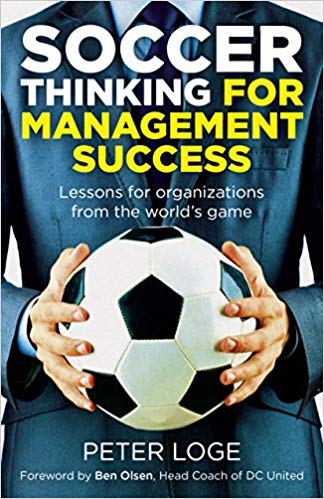
I talked to dozens of current and former players at all levels about how soccer thinking helps them succeed off the field for my book, Soccer Thinking for Management Success: Lessons for organizations from the world’s game. Three of those lessons can make you more successful at work right away.

Here’s how soccer and business are related:

soccer thinking for management success

Know when to run and know when to rest

There are no timeouts in soccer and each team is only allowed three substitutions during a 90-minute game. That does not mean the players sprint back and forth the whole time, like some middle school gym class nightmare.

The best players pick their moments. They walk or jog to put themselves in position, take advantage of opportunities, and then sprint when they need to.

Neil Richardson, a former professional player turned manager and consultant put it well – “When you run, you run. When you walk, you walk. It’s about pacing yourself. You need to have the judgment to know when to go full speed or lay off. Leadership on the field or in the boardroom requires that you know about how to sense rhythms and understand timing.”

You cannot go flat out all the time at work or on the field. Study after study points out that regularly working more than 55 hours per week is counterproductive. If the greatest players in the world can’t sprint for 90 minutes, there is no way the rest of us can sprint for 60 hours.

Like the top players on the field, top performers in organizations know the importance of taking breaks and getting rest so that they can be at their best when needed.

Your company is a team, not a family

company team

Managers like to say “we’re all a family here”, but you’re not a family. Families don’t have a “child of the month” prize that comes with extra dessert and children don’t family-hop, picking the house with the fastest Wi-Fi or most lenient curfew.

If the family hits a bad financial stretch, children aren’t laid off. Parents don’t trade children to other families for kids to be named later.

Your organization is a team. You were hired for your ability to help the larger unit achieve a goal. You did not show up at the doorstep of corporate headquarters in a basket. Instead, you were selected over others because of your skills and experience.

Behave as such.

Work hard for your teammates and colleagues. Develop the relationships needed to get the job done, but know that you are expendable. If the needs of the position change, if the company shrinks or for any number of other reasons, you can be let go.

That is not a reflection on you.

You are not being banned from Thanksgiving dinner. Like a player on a soccer team who gets traded or cut, your skills are being moved out of a system.

The flip side of this is that leaving a job is not running away from home. Going to another company or quitting just because you want to is not abandoning your family legacy – it’s taking your skills somewhere else.

If a player gets a better offer from a better team, that player leaves and no one holds it against him. Adopt the same attitude at work.

Failure and fame are fleeting

Mary Harvey tells a great story.

She was the goalkeeper on the first Women’s World Cup winning team. Right before halftime of the championship game, she made a mistake and let in a goal. Suddenly, the US was down 1-0 with 45 minutes to play and the world championship on the line.

During the halftime, the team figured out how to adjust. They came out for the second half and went on to win the game with Harvey’s help. There wasn’t time for finger pointing or interrogations.

She made a mistake. She knew it and so did everyone else. Immediately, she was able to put the mistake behind her and help her team win. It is worth noting that Harvey told me “I can’t recall a single thing I learned from winning.”

If you fail, you have to figure out what to do about it and then go do it.

Danny Karbassiyoon was the first American to score for Arsenal, a legendary team in England. But injuries cut his career short and he was a former almost-star before he knew it. He went on to find an online video game company. As he put it to me, “Failure is not particularly an option for me, but sometimes it becomes a reality. It knocks you down, and you have to go on and get stronger because of it.”

Failure doesn’t have to last and fame almost never does. Danny was a rising star with one of the biggest teams in the world– then, he wasn’t. Mary was the best female goalkeeper on the planet, then she became a consultant.

Neither mistook their moment of glory for a lifetime of honor, just as neither mistook a setback for proof of a doomed life. Enjoy the moment, then get on with the next task.

Added time

business and soccer

These and other lessons from soccer can help organizations, managers, and staff succeed. Not all lessons from soccer transfer to work, of course. I don’t recommend grabbing your leg and rolling around on the ground if you get a difficult question during a presentation and ripping off your shirt and leaping into your colleagues’ arms after closing a big deal is never a good idea.

But the next time your boss says you should be working on the weekend, say “thanks”. Grab the remote or head to the field.

The post Want to Be Successful at Work? Watch More Soccer appeared first on Dumb Little Man.


from
https://www.dumblittleman.com/soccer-and-business/

Tuesday, 4 September 2018

How Is an Entrepreneur Different From a Businessman?

“I am an entrepreneur, but I am also a businessman. I can’t be both. There must be some difference between entrepreneur and business owner. Oh, God! Can anyone help me with this?”

If this is the thought going through your mind right now, then you are on the right page at the moment. Many find themselves in this difficult situation when they start a business of their own. I will try to clear all your doubts and help you decide what you are through my points.

So, read this post till the end to entirely comprehend the difference between entrepreneur and business owner.

Originality of idea

originality of idea

An entrepreneur always starts with a fresh and out-of-the-box idea. He wouldn’t even start if the idea has already been taken.

A businessman may or may not have one’s own idea. He only thinks of money and profits which is why it won’t really matter to him if the idea is already out there.

Since entrepreneurs usually have less to invest, they have to emphasize a lot on finding the most innovative ideas, unlike regular business.

The decision of taking risks

When it comes to risk-taking, an entrepreneur doesn’t usually hesitate in taking any risk as there isn’t much choice.

This, however, might not be the case with businessmen. A businessman would usually think hundreds of times before getting to any decision.

Businessmen take well-calculated risks. One may not take the risk if losing money has been predicted. In entrepreneurship,  it’s always a 50-50 chance.

A boss vs a leader

For an entrepreneur, his co-workers are his business partners. He would even take part in the active processes of his organization to lead his team. This eventually motivates his co-workers and improves their productivity to a massive extent. It also serves as a way for an entrepreneur to consistently keep up with the performance of his organization.

On the contrary, a businessman sees every person working under him as a worker and him as the boss. He may not always keep up with the performance of his organization as there’s a pretty thin line between visualizing things from going through reports and experiencing things personally.

Perspective towards customers service

For an entrepreneur, serving one’s customer is a holy duty which one must do with one’s full heart. One is always grateful to the customers and letting them down would be one’s biggest nightmare. Now, these customs would not necessarily fit a businessman.

For a businessman, customers are just the source of income to one’s business. Practically, one does not truly respect them unless one observes a considerable amount of profit from them.

Perception of competition

A businessman is competing with the market on a daily basis to get his company on the top. He’ll take whatever step is necessary to achieve that.

An entrepreneur continually strives to make his startup better. He does his best without having to actually compete with anybody.

Furthermore, entrepreneurship is all about proving that one’s idea really works in making the lives of their consumers better. Once proven, sales will generate automatically. Of course, the process also requires a great deal of promotion.

Definition of Success

definition of success

Entrepreneurship is striving to get one’s vision come true. A lot of startups have come up with many revolutionary ideas over the years. Of course, there’s no denying the fact that entrepreneurs love to make money, too. However, it’s a business generated out of one’s profound faith in one’s ‘out of the box’ idea.

Most importantly, entrepreneurs are believed to always have something better and new to offer. They aim to revolutionize the lives of many.

However, this doesn’t hold true for a regular business as it is totally profit oriented. In many cases, businessmen even overlook the quality of their services or products as they desperately look for ways to earn more profits.

Success in a regular business, nowadays, is certainly beating the competitors and getting on the top of the SERP. Of course, there’s no denying the fact that there are many regular businesses that have been delivering at their best over the years.

See Also: Top Lessons From Successful Entrepreneurs You Need to Know Now

The Bottom Line

In this post, we have shared some valuable points that should make the difference between being an entrepreneur and a businessman much apparent by now.

Aspects like independence, low capital, originality of ideas and of course, innovative ways of earning is what really make an entrepreneur. Most importantly, it is absolutely based on coming up with the most brilliant ideas to improve lives.

A regular business, on the other hand, runs on the basis of heavy capital and unimaginably effective promotion to beat its competitors even if it has nothing new to offer.

See Also: Tips for New Entrepreneurs: What You Need to Know Before Starting A Business

The post How Is an Entrepreneur Different From a Businessman? appeared first on Dumb Little Man.


from
https://www.dumblittleman.com/difference-between-entrepreneur-and-business-owner/

Monday, 3 September 2018

Why You Should Keep Your Journal Positive

I’m sure you’ve heard about the wonderful benefits of keeping a daily positive journal.

Journaling is just as great as you think it is. It comes with a world of creative freedom and you can make with it what you wish. It’s a great way to get what’s on your mind down on paper.

All the parts of your day that are eating at you and all that anger that is erupting inside of you can be exploded onto a piece of paper. With it, you can let go of those emotions and raging thoughts deep inside of you.

While the freedom to vent without judgment is one of the many benefits of journaling, it is even more beneficial for you to journal your positive, hopeful thoughts.  Here’s why:

It Increases Gratitude

journaling

We are always so caught up in the negative. We spend too much time focusing and writing down what went wrong with our day than recognizing what went right.

There is an endless amount of beauty in this world and too much we take for granted. Every day, journal about the people you love, the gifts you have, and the fortune you’ve been given. Once you consider all the blessings in your life, even the worst days won’t seem quite as bad.

See Also: A Little Bit of Gratitude, Everyday!

Builds an Optimistic Attitude

Getting into the habit of writing down positive thoughts and events will help shift your mindset to become more positive.

For many of us, we’ve fallen deep into the habit of self-deprecation and it has become quite a challenge to break. Changing your perspective won’t happen overnight, but keeping a daily positive journal could be a great and simple way to change how you think forever.

Every time you want to write down something negative, change it to something positive. In time, you will find your mind making this change as well.

What You Put Out Into the World is What You Receive

positive journaling

If you release negativity into the world, you will only receive more negativity.

Journaling can be a great way to manifest your desires or shoo them away. If you want something, write it down.

Write down how achieving this desire would impact all your senses. Write about it like you already have it — as if you are already experiencing the benefits. Putting these feelings out into the world can and will attract a positive outcome that will fulfill your desires. Radiate positive energy and the universe will reward you.

See Also: Inspiring Journaling Prompts To Help Re-Shape Your Life

Start the habit of losing yourself in writing down all your blessings and emitting all of your happiness onto a blank page. Even if you’re feeling deep in a rut, unlucky, and unloved, you can still release some optimism into the world.

What do you have to lose?

The post Why You Should Keep Your Journal Positive appeared first on Dumb Little Man.


from
https://www.dumblittleman.com/daily-positive-journal/