Thursday, 24 August 2017

How to Create and Maintain Personal Boundaries

Personal boundaries are limits we set for other people regarding their behavior towards us. Establishing personal boundaries means stopping other people from pressuring us to do what we don’t want to do or put up with things we don’t want.

There are people in our lives that can violate our personal boundaries and make us feel uncomfortable, used and emotionally drained. Many of us put up with poor treatment by others because we are afraid to make them feel angry or lose their friendship. We might also feel guilty for standing up to other people and telling them no.

If you often feel like that and have difficulties building and keeping personal boundaries, there are a few things you need to practice.

Get Comfortable with Negative Emotions

Standing up for yourself and saying no to people very often gets a negative reaction from them. That is something to be expected and you need to realize that them getting mad is not your problem and that you cannot allow your boundaries to be violated just for the sake of avoiding negative emotions.

Even though people may get angry at first, they will soon realize they were asking too much from you. And if they don’t realize that and still hold resentment, that is not your fault. You should feel free to let them go.

Don’t Reward Poor Treatment by Giving People What They Want

When people learn that they get what they want from you even when they treat you poorly, they will be encouraged to continue doing that. By standing up for yourself and not giving them what they want, you’ll be teaching them that their behavior is not only unacceptable but also doesn’t get them anything positive. We have the power to guide how other people treat us by our reactions to their behavior.

Feel Free to Say No

say no

You may be afraid to hurt someone’s feelings or appear selfish by saying no. However, you need to realize that saying yes when you mean to say no causes you to hold unnecessary resentment towards other people. That isn’t healthy for you and your relationships.

Saying no to someone doesn’t mean you are a bad or a selfish person. It means you are being honest about your feelings and desires.

See Also: The Courage To Say No

Make Yourself Unavailable

You can stop other people from violating your boundaries by making yourself unavailable physically or emotionally. Don’t answer their calls and messages or tell them you are busy. Don’t react when they try to get something out of you and don’t participate in conversations that make you feel bad about yourself. Often, the best thing you can do is remove yourself from a situation that makes you uncomfortable.

Know What You Want

To be assertive and to establish clear boundaries, you need to know what you want from people and what your values are. You need to be in touch with your own wants and feelings to be able to communicate them and recognize when they are being hurt or violated. Be introspective and ask yourself if there are things that make you feel bad or uncomfortable but you do them anyway because you feel pressured by other people.

Don’t Try to Change People

People who violate other people’s boundaries usually lack self–awareness and that’s why it’s difficult to make them change their behavior. They see nothing wrong with it.

If someone can’t understand that their behavior is unacceptable even when you explain why, there’s nothing you can do about it. Trying to make them change is a waste of time and energy.

Practice Self-Care

practice self care

Practicing self-care involves taking care of your health and body, taking alone time to relax and pursuing activities that make you feel happy.

When you practice self-care, you become more tuned with your own feelings. You learn to value and cultivate your own well-being. The more you practice self-care, the less likely you are to put up with people and behaviors that are not healthy for you.

See Also: Neglecting Self Care: The Biggest Mistake I Made (And How You Can Avoid It)

The post How to Create and Maintain Personal Boundaries appeared first on Dumb Little Man.


from
https://www.dumblittleman.com/personal-boundaries/

The Surprising Benefits of Flaxseed You Might Not Know About

Flaxseed has been around for many centuries and is fast gaining popularity worldwide due to its powerful nutritional and healing benefits. It can be consumed as a seed, in pill form, or as an oil.

Flaxseed has been proven to not only reduce the risk of cancer, diabetes, heart disease and stroke, but it’s also considered to be a cultured superfood that has numerous advantages to your health and well-being. It can help you with quick weight loss and in lowering cholesterol.

Here are nine (9) more amazing benefits of flaxseed you might want to know more about.

Clear Your Skin with Flaxseed

Flaxseed oil, which is made from ground and pressed flaxseed, is also called linseed oil. It’s one of the top natural moisturizers for the skin. It has amazing healing qualities that can also help clear up acne, and heal acne scarring as well as pigmentation marks. It can provide you with a more even skin tone and reduced appearance of dark circles under your eyes.

See Also: 10 Best Skin Foods For Healthy Glowing Skin

The Best Help for Digestive Problems

If you suffer from constipation or you have issues with your digestive system that prevent you from having normal and smooth bowel movements, consider taking flaxseed oil. It can help your system function more smoothly.

A good way to take flaxseed oil to gain its digestive healing benefits is to consume one cup of slightly warm water with 1 to 3 tablespoons of flaxseed oil every morning. You will soon feel a great deal of relief throughout the day. You can increase the number of cups and oil depending on how you feel.

It’s Gluten-Free

If you have a sensitivity to gluten or you suffer from celiac disease, you can benefit tremendously by incorporating flaxseed into your diet. It is a natural and healthy way to replace gluten type foods. This is because flaxseed has anti-inflammatory properties that can reduce the inflammation in your body usually caused by gluten and grains.

Flaxseed is a Cancer Fighter

Studies show that flaxseed can protect the body from cancer of the breast, colon, ovarian and prostate. This is due to the high amounts of omega-3 fatty acid and lignans. These two components help with balancing hormones, reducing and inhibiting tumor growth as well as reducing your body’s inflammation.

Flaxseed Helps You Lose Weight for Good

weight-loss

One of the benefits of flaxseed is weight loss. It contains healthy fats and fiber which can be beneficial for losing weight. These components help you feel fuller after eating. They can prevent you from taking in more calories than you need to and this results in faster weight loss.

To take flaxseed for weight loss, it is important to stay consistent in adding it to your diet. Start by adding 2 to 3 teaspoons into your smoothies, soups, salads and other foods and drinks. Be creative in finding ways to incorporate flaxseed into your weight loss plan.

What Is In Flaxseed That Makes It Such A Superfood?

Flaxseed contains a large dose of nutritional benefits for your body. This includes:

  • Omega-3
  • Fiber
  • Manganese
  • Selenium
  • Phosphorus
  • Magnesium
  • Vitamin B1 and B6
  • Protein
  • Iron
  • Zinc
  • Potassium
  • Copper
  • Zinc

See Also: A List of Superfoods You Definitely Need in Your Diet

Flaxseed Loves Your Heart

healthy heart

Due to flaxseed oil being high in alpha-linolenic acid (ALA), it has been proven helpful in treating and preventing heart diseases. Studies show that people who consume foods rich in ALA were less likely to experience a fatal heart attack. Another study shows that people who ate foods rich in ALA had less heart disease and their risk of death went down.

Flaxseed Can Eliminate Candida and Yeast from your Body

Candida and yeast can cause havoc in your body as they create many debilitating symptoms. The list includes changes in hormone levels, weakening of the immune system, digestive problems, weakness of joints, and urinary tract infections. Flaxseed is high in polyphenols which support the growth of probiotics.

Reduces Cholesterol

Flaxseed is an excellent cholesterol eliminator. This is due to its fiber content. Fiber traps the cholesterol from being absorbed into your bloodstream and eliminates it from your body.

Pro-Tips

Whether it is for weight loss or skin care or even for the prevention of cancer and heart disease, flaxseed can be one of the best positive dietary changes that you can do for your body.

The one thing that might be confusing is knowing the best way to consume flaxseed. To reap all its benefits, you need to take it in its sprouted form. This is when you soak the flaxseed and wait for the seeds to sprout. This gets rid of the phytic acid which helps with better mineral absorption.

The reason flaxseed should not be eaten whole is that your body will not get the most out of its nutritional value. The seeds will just pass through your digestive system. Although you will get benefits, it won’t be as extreme as taking the seeds in other forms.

Another great way to take in flaxseed is by grinding the seeds into powdered form. This is also called flaxseed meal. It is good to remember that when you to take grounded flaxseed, you have to consume it as soon as possible. When it is exposed to air, it loses its potency.

The most important thing to keep in mind is that you need to create the best plan for you to incorporate flaxseed into your daily health routine. Remember to stay consistent and focused on your health and well-being.

The post The Surprising Benefits of Flaxseed You Might Not Know About appeared first on Dumb Little Man.


from
https://www.dumblittleman.com/benefits-of-flaxseed/

7 Strong Reasons to Learn a Foreign Language

Nelson Mandela once said: “If you talk to a man in a language he understands, that goes to his head. If you talk to him in his own language, that goes to his heart.”.

This quote couldn’t be more precise.

As humans, we are attracted to other humans with whom we have something in common. If there’s something that two persons both like, hate or want, a rapport will suddenly grow and their connection instantly grows stronger.

One of the most common things that bonds people together is the language they speak. Obviously, if someone talks to you using your native language, you’ll be treating him differently compared to someone who speaks a foreign one.

Yet, even though learning a new language is extremely beneficial for several reasons, very few of us are really taking action. We’re somehow afraid of the hustle and work that comes with the process.

We can change our attitude by simply acknowledging the strong reasons of learning a foreign language. In today’s post, we’re going to convince you to pick a foreign language and start learning it immediately. Without further ado, let’s begin.

More Professional And Personal Opportunities

“One language sets you in a corridor for life.  Two languages open every door along the way.” ‒ Frank Smith

You’ve obviously seen a lot of employers looking for individuals who can speak more than one language. If you know more than just your native language, you’ll find more job opportunities along with better payments.

Moreover, the personal opportunities will be more numerous, too. You can communicate with more people, build new relationships and learn from different mindsets.

So, you see a hot person in the bar and you want to get in touch. You can use a foreign language to get a better chance of capturing the stranger’s attention.

Improved Cognitive Performance

When we learn new things, we’re using different cognitive functions, like our memory and problem-solving aptitudes. It’s no secret that learning a new language will make you a “smarter” person.

It doesn’t really matter what language you’re learning, how old you are or how smart you are. Your attention span will be improved. You’ll have a better memory in time and you’ll develop a strong resistance to age-related diseases, such as dementia and Alzheimer’s.

Ability to Establish Strong Connections with Other Nationalities

As mentioned earlier, grasping a basic understanding of a foreign language should open the gates of communication between you and other nationalities. It will not only help you in asking for specific information during your traveling journeys, but it can also help you build a friendship out of a small talk.

Connecting with people from other countries and cultures is truly important because it’ll help you become more open minded and tolerant. It’ll help you acquire tons of knowledge that would otherwise be impossible to gain.

Better Traveling Experience

traveling on a foreign place

Every one of you probably likes to travel. After all, all of us are curious what life looks like in different places. While grasping a foreign language, you can certainly enjoy a more intense experience while traveling abroad. That’s because you won’t just sit quietly and travel alone.

Instead, you can find travel buddies, talk to locals, hook up with beautiful men/women, build a lasting relationship and much more.

See Also: 10 Wonderful Benefits of Traveling

Better Self-Control and Smarter Decisions

It has also been proven that bilingual brains are much better at self-controlling. Even though self-control also represents a cognitive function, it’s still worth noting how helpful such skill is in our daily lives.

Moreover, another study shows that learning a second language can help you make better decisions in life. The study emphasizes the fact that when a person speaks a foreign language, his tendency towards loss aversion significantly decreases.

See Your Own Culture from an Outsider’s Perspective

traveling

“You can never understand one language until you understand at least two” – Geoffrey Willans

Learning a second language will give you a lot of new insights. You’ll be able to understand how other foreigners perceive your country and culture. You’ll also see a lot of differences in your own perception, too.

Better Learner & Better Problem Solver

When you learn a new language, you keep solving problems. When you listen to a foreigner – or even better, if you talk to him – your brain continuously works. It works hard in order to make things clear. This type of ‘brain exercise’ is extremely beneficial in the long term because you’ll advance into a better learner.

Moreover, you’ll solve your problems faster and more efficiently. The reason is that by learning that foreign language, your brain has already “grown muscles” that allow you to “lift” your problems without a lot of hustle.

See Also: 5 Tips to Learn Languages by Reading Foreign Books

Takeaways

To learn a new language isn’t rocket science, yet it’s not that simple either. It all depends on your linguistic talents, the work you put in and the mindset you develop. Do this now, and you’ll praise yourself later.

The post 7 Strong Reasons to Learn a Foreign Language appeared first on Dumb Little Man.


from
https://www.dumblittleman.com/learn-foreign-language/

What You Need To Do To Protect Your Ears From Deafening Urban Noise

Noise pollution is becoming a pressing global issue more and more each day especially in the urban setting. Studies have shown that due to urban noise, city dwellers experience an average hearing loss equivalent to a person who is around 10 to 20 years older than them. Seniors are in more danger because sudden and violent changes in volume can result to heart attacks and strokes.

With a projected annual urban population growth of 1.85 percent until 2020, we get to forecast an increase in a portion of the world’s population that gets exposed to noise pollution and its ill effects.

The same study also showed a 64 percent positive correlation between hearing loss and city noise pollution levels. That means hearing loss could likely be a direct or indirect result of modern city living.

Here are some useful hacks to protect your ears from the ever-growing noise of the city.

Minimize your personal environment noise

If you live in a noisy building or neighborhood, talk to the landlord and your fellow residents about the enforcement of a noise management plan to cover entertainment venues, commercial sites or construction activities around your area.

You may also apply acoustical adaptations, like a soundproof wall, double glazed windows and a quieter ventilation.

Try to keep your tone low when talking to elderly people. Hearing difficulties come with age. Don’t shout or raise your voice when talking to them. Instead, try whispering or coming closer to them while talking.

Music is life, but you need to limit the volume

We all need music in our lives. Without it, life would be a deafening silence. However, to enjoy music, we must listen to it at 60 percent of the maximum volume without going over 60 minutes per day.

Just as seniors love their music, it’s a good idea to tone it a bit down when they’re around. People with advancing age tend to block out other important sounds, such as cars honking or dogs barking, when loud music is playing.

It is also best for our health if we avoid using our personal music player as a tool to drown out background noise. Yes, that sounds like a bummer. But, when music that goes through your headphones becomes louder than any external sound, then it is too loud and can affect your sense of hearing negatively.

See Also: How To Choose Headphones That Best Suit You

Be proactive about caring for your ears

You shouldn’t have to wait until you observe hearing problems before you even start to care for your ears. The good side to most hearing problems is that most are preventable. With the right behavior, practice, environment and early detection, you get to prevent most hearing impairments.

Also, you shouldn’t just be taking care of your health, but other people’s as well. We have to be mindful of our surroundings and the noise we create that has the potential to harm other people.

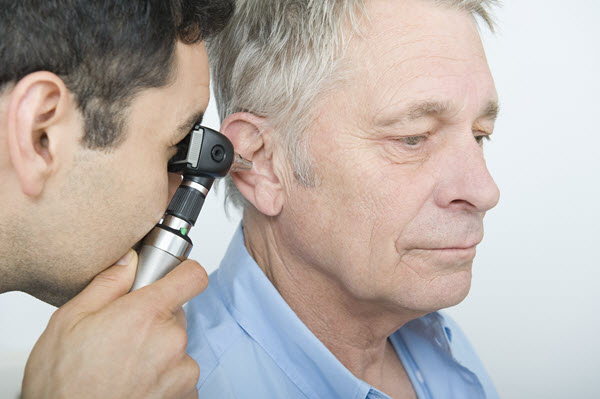
Seniors should also have regular check-ups concerning their hearing as problems in the ears often develop into severe conditions. One good example is vertigo wherein balance gets affected.

ear checkup

Paying close attention to your ears is important, especially when there is still a stigma surrounding hearing problems and the deaf community. The truth is, everyone hears things differently and we can all benefit from some love and respect for each other.

When necessary, use earplugs

Earplugs are valuable in a world where people drown each other with noise. The use of earplugs can reduce sound levels by around 15 to 35 decibels. So, when you’re in a place with loud noise or music, use earplugs for protection.

If you’re at a concert scene, you can still enjoy live music with earplugs on as it only decreases the sound to a level that isn’t harmful. If you’re in a firing competition, you might want to use earplugs, too, since the blast of guns can be ear-splitting.

Find time to rest your ears

If you think you’ve overused your ears already, you must take the time to rest. Let your ears recover after exposing them to harmful decibel levels for a period.

According to a study, you would need at least 16 hours of rest, as a recovery period for your ears, after spending about two hours in an environment with a 100dB level of sound. An example of such place is a club. So, if you’ve been clubbing all night, try to rest and stay in a quiet place the following day.

loud music

Takeaway

There are certain steps for you to follow so you can protect your ears from irreparable noise damage. You can avoid listening to loud music for a set time. You can also visit an audiologist near you for a checkup so you wouldn’t have to wait for signs of impairment.

And while you cannot personally turn the volume from a construction site at a minimum and neither can you mute the sound of traffic, you can, however, show your support for local initiatives that regulate noise pollution.

The post What You Need To Do To Protect Your Ears From Deafening Urban Noise appeared first on Dumb Little Man.


from
https://www.dumblittleman.com/protect-your-ears/

Wednesday, 23 August 2017

How Our Egos Create Drama in Our Relationships (and How to Avoid It)

“The ego is the false self-born out of fear and defensiveness.” ~John O’Donohue

I started a new relationship in December 2015, then moved countries to be with my Swedish partner in August, 2016.

The last year has been life changing in the best possible ways. I’ve learned so much about myself, things I didn’t have the courage to acknowledge before.

But it hasn’t all been a bed of roses—some of the insights I’ve gleaned haven’t been that comfortable to see.

We met on an intensive spiritual retreat in India. We’ve both spent many years working on ourselves and our issues, so it’s fair to say we’re both awake and aware. But this has not guaranteed an easy ride or a challenge-free relationship.

We both still have to work hard on the problems that come up, affecting us both individually and as a couple.

When our disagreements or arguments erupt, it is often over the smallest things, which seem so important at the time. A prime example is when my partner asks me to do something without saying “please” (something that’s common in Sweden.)

Such a minor failing has the power to seriously irritate me, causing our argument to blow up out of all proportion—sending one or either of us into fits of temper tantrums that can end with one or both of us brooding and not speaking to the other.

Although we’re both aware how childishly we’re behaving and can see our over-reactions, we are nevertheless at a loss to stop or change this process. Why? Because of our egos!

For the first time in my life I am seeing, experiencing, and understanding the ego play that takes place in every conflict I have. These insights are allowing me to unravel the true nature of my ego and its workings.

If I were to describe my ego, I would compare it to an irritable, barely containable caged monster on the one hand and an irate, screaming five-year-old on the other. And just like a child that doesn’t get her own way, she’s constantly throwing tantrums.

These tantrums take the form of anger, hurt, fear, defensiveness, exaggeration, frustration, self-preservation, insecurity, self-pity, and tears—all mixed with large quantities of drama.

In the heat of an argument, my five-year-old ego is very quick to feel hurt, so she reacts by jumping, stamping her feet, cursing, and defending herself. Then, just as quickly, the caged monster surfaces, rearing up like an angry giant, sword and shield in hand, ready to inflict hurt in return.

I literally see my ego self rising up like a dark shadowy character, looming menacingly above my head.

Of course I know this ego play doesn’t solve anything—it only serves to trigger my partner’s own ego defense games. Suddenly we’re both wounded five-year-olds, shouting and throwing ugly insults back and forth at each other.

Then, invariably, we have to argue about who started it and which one of us is right.

As you can imagine, these ego battles take up a lot of energy and are very stressful, not to mention emotionally draining.

I notice that when I’m in this heightened state of drama, my ability for logical thinking goes out of the window. I lose all connection to my grown-up self and I feel the adult receding, regressing me back to an insecure child.

I see myself adopting the same body language and survival strategies I used when I got into disputes with my mother during childhood.

Looking back, it’s obvious to me that my current over-reactions have a lot to do with how I was brought up. My mother was a strict matriarch with black and white views—grey areas didn’t exist in her world. She was always right and everyone else wrong, and there was no room for argument.

If I ever dared to argue, I would be quickly silenced with a barrage of cutting words or physical blows that would leave me hurt, feeling powerless and seething for hours. My voice was quashed, my will controlled, and I felt small and stifled.

As a child, I didn’t have the awareness to recognize the surge of my ego during these altercations with my mother, when my very existence felt under threat. But of course, every part of me screamed silently in protest, including my ego.

Now, as a so-called mature fifty-year-old adult, it’s quite disconcerting to visibly witness my conditioned responses popping to the surface during heated conflicts, especially when some part of me feels threatened.

These responses haven’t altered or evolved at all since my childhood. Sometimes it feels like I’ve never really grown up.

I still discover myself seething in the same helpless way to emotional triggers and feeling the same powerlessness when my will is challenged or when I feel controlled, as I often do during conflicts with my partner.

My ego rears up in anger and defense in exactly the way it did when I was a child.

And yet, even in the most extreme spells of ego drama, I’m sometimes able to take a step back from my hurt, stealing a momentary pause from the heat of my frustration.

These short breaks allow my anger to calm, giving space for my ego to stand down. Then I’m able to recognize the reasons for my exaggerated reactions, understanding that a part of me was feeling threatened.

I’ve observed that my biggest over-reactions occur when my partner threatens what I deem important; for example, the time and money I spend on my spiritual activities.

In these brief moments of lucidity, the ego is fully exposed with technicolor clarity. In this instant, the cause of our argument, which seemed so important just a few minutes before, completely loses its power and dissolves, rendering the whole situation funny and somewhat ridiculous.

My ego’s true nature is laid bare during these points of pure seeing.

It’s utterly clear to me that my ego simply functions to protect the parts of myself I feel I must defend, secure, or guard, like my will, my way of expression, my beliefs and moral values.

My ego jumps up in defense of these values because of the importance I’ve given them, effectively giving my ego permission to react whenever these values feel challenged.

Amazingly, the truth is, these morals can only exert power over me if I allow them to. I can equally decide not to give them any power at all, which should gradually stop my ego’s need to defend them.

I know it will take time to break this pattern of over-reactions to emotional triggers, since my conditioned responses are almost automatic now. However, in conflict situations, if in one time out of ten I don’t react, it will certainly make a difference to my life and relationships, won’t it?

What a liberation that will be!

For years I’ve unknowingly been trapped in the same ego cycle of trigger/reaction, trigger/reaction that developed when I was a child.

Now, with the benefit of being able to witness my ego play in action, I no longer feel a prisoner of its games. For the first time in life, I am learning to choose whether or not to react.

These other insights around my ego are helping to improve my partner relationship, as well as the relationships with family and friends.

The ego wants to blame others.

We have all become so accustomed to blaming other people and circumstances that we are often not even conscious that we’re doing it.

On the surface, it’s much easier to blame others, because it removes the burden of accountability from us and places it firmly at the feet of the other. However, although blaming others appears to be a quick-fix solution, in all honesty, it isn’t.

Believe it or not, blaming others takes away our control of the situation and passes it onto the other. It prevents us from seeing the whole truth of the issue and blocks us from fully understanding ourselves, which can keep us stuck in the same obstructive patterns of behavior.

For years I blamed my mother for everything that was wrong in my life. I blamed her for not being there for me, for not supporting my dreams, and for not being the parent I expected her to be. Spending so much time and energy blaming her, I wasn’t able to see my own part in the situation.

When I finally had the courage to stop blaming my mother, it came as quite a shock to me to realize that I was equally responsible for the things I was unhappy with.

It’s clear to me that my ego’s fear of admitting culpability kept me in blame mode.

I naturally progressed onto blaming my partner, because my ego makes it difficult for me to accept my part in a conflict that I am at least partly responsible for. So it’s no surprise our arguments escalate as they do.

Ultimately, we must all strive to accept responsibility for every action we take, even the ones we’re ashamed of. The more we’re able to do this, the stronger we become and the weaker our egos will be, gradually loosening the grip they have on us.

The ego covers up.

Another thing I can say about the ego is that it will do anything to cover up its mistakes, especially when it sees it’s wrong. Its attempts to cover up increase when caught red-handed, behaving just like a child caught with his hand in the cookie jar.

I remember when I was a child, even when I was caught in the act, I would do everything I could to cover up my mistake, trying my best to deny the blatant truth.

Maybe my actions as a child could be excused, but sadly, my behavior as an adult hasn’t improved—I still find myself fighting to deny the truth when I’m unexpectedly caught off guard. Like when my partner surprises me, by correctly guessing the trivial cause of my upset.

My ego hates being so easily called out, so it must cover up and defend.

One of the hardest things for any of us to do is to admit we are wrong, because when we own up to being wrong, it automatically makes the other right.

And being wrong is something our egos cannot bear. As a result, we find it difficult to say sorry or to ask forgiveness, which exacerbates our conflicts.

I’m also recognizing that our inability to admit our wrongdoing keeps us stuck in our defensive positions, which allows our egos to fool us into fighting, justifying, and defending every point of view—a complete drain of our energy.

I’ve noticed, however, that when I see the truth and can openly admit it to my partner, surprisingly, rather than separating us, the admission brings us closer together, healing some of the hurt we created during our conflict.

So admitting that we are wrong need not be a negative experience, but can instead empower us, lessening some of the control our egos have on us.

The ego wants to hurt back.

For me, one of the worst things in the world is the pain of feeling hurt, as I imagine is true for most of us.

Sometimes, the hurt we feel paralyzes us and we’re unable to fight back, but at other times, the only thing we can think of is how we can hurt the other person back.

Our egos trick us into believing that hurting the other will alleviate the pain we’re feeling.

I’ve realized that in all conflict situations, it is actually our egos that feel hurt. Again because some value or aspect of the image we have internally built up of ourselves is being challenged, threatened, or undermined in one way or another.

I’m ashamed to say that on many occasions, both in my childhood and adulthood, my ego has wanted nothing more than to inflict as much pain on others as possible, as a way of lessening some of the hurt it was feeling.

But retaliation is not the answer; it only adds more fuel to the fires of our egos.

Maybe I can be forgiven for saying that in my childhood, hurting others was an unconscious reaction to my own feelings of hurt. And in the recent past when I was still unawake, hurting someone who hurt me was my natural course of action. But now, with my increasing awareness, knowingly hurting another is not something I can condone.

In the heat of ego fights between me and my partner, when my ego rears up ready to defend itself, it’s hard, but I am becoming more and more able to check myself, before I go over the line with insults I know will cause my partner pain. Even when I feel he has crossed the line with me, I can still consciously stop myself from going too far.

I consider this a huge triumph over my ego, and something I’m proud of.

Every time I can stop myself from blindly over-reacting to a perceived threat to my values and can become an observer of my ego and its games, I know I’m taking a step in the right direction.

The more conscious we can all become of our ego play in action, the more freedom we will gain from our egos. Then, over time and with consistent effort, positive changes to our life journeys and relationships are inevitable.

Artwork by artbymanjiri, CC 2.0

About Jacqueline Vanderpuye

Jacqueline Vanderpuye is a medium, energy worker, avid meditator, and spiritual guide. She began her inner journey while living and working in Shanghai, exploring journaling and writing as a form of personal therapy.  Jacqueline enjoys writing about topics that affect her everyday. She now lives in Sweden. For personal readings, spiritual coaching, and more information contact Jacqueline at vanderpuyejacqueline@gmail.com www.calloftheinnervoice.com.

Get in the conversation! Click here to leave a comment on the site.

The post How Our Egos Create Drama in Our Relationships (and How to Avoid It) appeared first on Tiny Buddha.


from
https://tinybuddha.com/blog/egos-create-drama-relationships-how-to-avoid-it/

How to Unlock Fat Burning Mode: The Ultimate Guide to Losing Weight

Tuesday, 22 August 2017

How to Dissolve Social Anxiety by Doing Nothing

“Your thoughts have to understand one thing: that you are not interested in them. The moment you have made this point you have attained a tremendous victory.” ~Osho

“What do you do when you go out alone to the forest for the whole day?” my friend asked.

“Nothing. I just sit there, enjoy the peace, and let my thoughts be,” I replied.

“So you meditate,” she said.

“No,” I objected. “I just sit there and do nothing.”

“But that’s meditation,” she insisted.

I smiled and shrugged my shoulders. “Okay, if that’s what you want to call it.”

At that time, most people and society were a big, mean, frightening monster I kept trying to get away from—if not physically, then at least mentally by blasting music through my headphones, escaping far away in my daydream world, or by drowning my invasive negative thoughts and feelings in drugs and alcohol.

Yet, the real monster was inside of me and didn’t plan on leaving any time soon.

I remember how my social anxiety got worse around some people, usually the ones who seemed to feel superior, arrogant, and judgmental toward others. At least that’s how I perceived them in my subjective reality of a socially anxious person. But this wasn’t the only determining element for the intensity of my fears.

Authority figures were frightening too, even the kind ones.

The truth is, when you have social anxiety, you have such low self-esteem and an intense feeling of inferiority that you think pretty much everyone is superior to you.

So as a general rule, my brain decided that everyone is better and cooler than me, and that pretty much everyone thinks I’m ugly, stupid, and worthless. Therefore, I better stay away from people if I want to avoid mocking, judgment, and rejection.

Every time I didn’t respect my brain’s wish, an alarm in the form of severe anxiety would go off.

Actually, that alarm went off even when just the thought of some people crossed my mind.

But after hours of my special meditation, these thoughts lost their grip. I would think of people and no unpleasant emotions would arise, or if they did arise, much less than before.

I would feel at peace… until the chaos of the city and society would get the best of me again. It would usually take just a day or two before I’d feel pretty much as my old anxious self, which might seem too short to be even worth the time to get out of a big city. It might seem like my few hours long trip was meaningless.

Yet, every meditation made me a little bit stronger and a little bit more peaceful.

Nothing is meaningless. That’s one of the precious lessons I’ve learned from nature.

When everything seemed to lose its meaning, I would look at nature’s beauty surrounding me. I would look at plants and know they are not meaningless. Besides having their special roles in the ecosystem, they appease me. So if they are not meaningless, nothing is, because in nature, everything breathes and lives as one.

There are many more lessons natural world has thought me.

You know what’s best about being surrounded by meadows, trees, birds, and butterflies?

You feel the life around you, but you know there’s no judgment or rejection involved, not in the same sense as in human society. No thoughts. Nature just is.

Especially plants, there’s something about them that is very calming.

Wild landscapes inspire me to just be. And when you “just are,” without judgment of good and bad, you become incredibly peaceful.

You have probably heard of Jim Rohn’s quote “You are the average of the five people you spend most time with.” While it might not always be true, I believe it generally is. That’s because we are influenced by our surroundings and social interaction.

Spending time in nature is like becoming infected with that peaceful just be feeling.

What does this have to do with social anxiety?

At first glance, it doesn’t have to do much with the “social” part of anxiety, but read on.

Social anxiety is born out of feeling of unworthiness, of not feeling good enough, of judgmental thoughts defining you as “bad” and defining other people as “bad,” “good,” or “better.”

When you just are, all the good and bad disappears and gives place to indescribable peace.

You become stronger and untouchable.

As I sit there on a meadow with the forest surrounding me, I just let my thoughts be.

I don’t try to stop them, create them, or analyze them. I don’t even observe them.

I probably can’t say I get lost in them either.

It’s more like I get lost in the peaceful part of myself while I let all the thoughts do whatever they want. I let them be, and with that, I let them go.

I am emptying myself.

One of my friends once said, “Why do you say you are emptying yourself? You should say you are refilling, not emptying.”

I say emptying because I don’t think that you have to fill yourself up to become the highest version of yourself.

Your true self is blissful, happy, loving, and peaceful. Unhelpful thoughts cover up that peace and make you get lost in the labyrinth of heavy and unpleasant feelings like anxiety, low self-confidence, fear, anger, and sadness.

When you let go of those thoughts, you automatically become everything you ever wanted to be.

So in the end, I like the idea of calling “just sitting in nature, doing nothing” meditation. After all, it creates the effect meditation is supposed to create.

If you haven’t already, I invite you try this “meditation” yourself. Sit there for a few hours. Or at least for one hour. Needless to say, looking at your phone doesn’t count as “doing nothing,” so leave it at home or in your pocket.

No need to analyze, observe, stop, redirect, or create your thoughts. Just be there. Don’t try to be present and don’t try not to be. Don’t try to be without thoughts, either, because as soon as you try to do anything with your thoughts, you are creating new thoughts, more thoughts, and the “just be” state is gone.

Just be. And let thoughts be too. It’s one of the best paths to yourself because when you lose all the unhelpful thoughts, you find yourself.

SaveSaveSaveSaveSaveSave

About Barbara Milavec

Barbara Milavec is an ex-social anxiety sufferer and founder of Free From Social Anxiety blog, where she shares helpful information and tips on overcoming social anxiety. She is also author of an extensive guide “Bye Bye, Social Anxiety ~ Proven Strategies for Growing Lasting Confidence and Calm Within.”

Get in the conversation! Click here to leave a comment on the site.

The post How to Dissolve Social Anxiety by Doing Nothing appeared first on Tiny Buddha.


from
https://tinybuddha.com/blog/how-to-dissolve-social-anxiety-by-doing-nothing/