
Tuesday, 26 December 2017

Monday, 25 December 2017
Why No One Wants Unsolicited Advice (and What Actually Helps)

“To meet complaint with unrequested council earns for the advisor a fortune of hidden contempt.” ~Greek Proverb
When people start dumping their complaints and woeful stories on you, how do you respond?
Do you see it as your golden opportunity to be of help to them?
Do you make it your mission to put your wealth of knowledge and wisdom to good use by coaching them through their difficulties?
I mean, isn’t this a great chance to share the extent of your wisdom and understanding, and also be of help to someone in their time of need?
But the most important question of all is this:
When you’ve encountered this situation, did they ask you for your assistance before you started advising them?
When people dumped their complaints on me, there was a time when I took the initiative and voluntarily started counseling them on their problem, even though they never asked me for my guidance.
I thought I was being helpful.
But then I made an important breakthrough discovery in maintaining the connections I had with others without accidentally destroying them.
Let me start at the beginning of my story…
When someone used to dump their problems on me, I used to think:
“Oh, they have this problem. I have the answers. I’ll be a good friend or family member and help them solve it, all because I care about them.”
I remember this one time, a friend of mine was having trouble dating women and he would complain about it to me.
Guess what I did?
Did I listen and seek to understand him, where he was coming from, and how he felt about the situation?
Nope.
What did I do?
I started right in on giving him unsolicited advice about how he could get better at dating women.
I thought I was being helpful.
But you know what?
I noticed a very curious thing happening as I did this…
I observed that his body language and voice tone started showing signs of irritation. I could tell he wasn’t welcoming and responding positively to my advice, even though I knew it was solid, and even though he was verbally agreeing with what I was saying.
Later, I started to wonder why this was.
Here he had a problem, I thought. Didn’t he want a solution?
Surely, he wanted one, right?
After all, why gripe about something if it’s not going to lead to a constructive outcome that brings about the desired results?
This investigation led me to question how I reacted when I shared my own problems with people and they responded by giving me unsolicited advice—which, incidentally, only happened for the first time after the incident with my friend and his dating problems.
Isn’t it funny how we sometimes don’t know that something’s annoying and maybe even condescending until we’ve been on the receiving end of the very same behavior ourselves?
I find it interesting that we often don’t know that we’re acting in ways that are turn-offs to others until we’ve had someone behave or treat us in the exact same way.
Isn’t it often only then that we have the epiphany?
Well, that’s what I learned about giving people unsolicited advice, especially in response to them dumping their problems on me—it’s patronizing and condescending.
Reacting to people who complain by telling them how they should solve their problems “forcibly” places us in the “superior” role to them. It frames us as the person with the “higher social rank” in the interaction, and lowers the complainer down into an inferior role.
And who likes to feel inferior to others?
But what do we think?
Isn’t it this:
“Oh, aren’t I being a great friend? I’m helping them out!”
But is it possible that we’re actually sending them a completely different message from the one we think we are?
Could it be possible that what they end up hearing is something else?
And could it also be possible that that message is something offensive and insulting to them?
Want to know what the recipient of unsolicited advice really hears?
I’ll warn you…
It’s not too flattering, and you may be ashamed of yourself to discover the true message behind your actions.
Between the lines, they hear you saying this to them:
“I think you’re inadequate and incompetent, and you require my superior knowledge and wisdom to make progress here. Without my help and intervention, you are a helpless victim incapable of dealing with your own problems. You should feel lucky that I’m even putting in my precious time and effort to give you some assistance. Furthermore, I don’t accept you the way you are. I’m making it my mission to change you so that you fit into my ideal of who I think you should be instead of accepting you as you are.”
Now imagine if someone said that directly to your face.
How would you feel?
Probably not very good, right?
Well, guess what?
That’s exactly how you’re making people feel when you give them unsolicited advice in response to their complaints.
So wouldn’t it greatly improve your ability to connect with people and win their esteem if you stopped making them feel this way?
For what’s more important than earning the love and respect of others?
Or, would you rather sacrifice their love and respect just so you can have your chance in the spotlight to prop yourself up as a “knowledgeable” and “wise” person?
And all for what?
Just to get an ego boost, at someone else’s expense?
After all, what does it profit us to share our “superior” wisdom and guidance with someone if all it earns us is their contempt?
And how does that really benefit us and our relationship with that person?
It doesn’t, does it?
Now let me ask you this:
Have you ever asked yourself why people dump their problems on others in the first place?
What do you think they really want by doing so?
Do you think they do it because they want a solution to their problem?
Do you think they do it because they want your help?
After all, isn’t that what we tell ourselves is the truth of the matter?
But are those the real reasons?
After all, if they wanted a solution and some help, wouldn’t they ask us for our feedback, opinions, or advice somewhere in there?
But do they?
Well, guess what?
Almost every time people complain, they’re not doing it because they actually want a solution to their problems. They’re not doing it because they want our help. They’re doing it for another reason altogether.
And what do they want exactly?
Simply this:
To be understood and receive sympathy.
That’s what they really want.
And more specifically, what they want is for someone to understand how difficult what they’re going through is for them.
That’s the response they really want from us.
Not unsolicited advice.
Trust me, that’s the last thing they want.
I mean, are you aware that people secretly hate and resent unsolicited advice, even though they’ll probably never tell us that to our face?
Instead, they’ll just put on a polite smile while perhaps they secretly fume about it behind their cordial mask.
I’ve discovered an important lesson in fostering healthy relationships is to stop trying to help people with their problems when they complain about them—unless they specifically ask for it. Instead, I’ve found it much wiser to seek to understand what they’re going through and what they must be feeling.
Then focus on that.
What people really want when they complain is to have their feelings not only understood but at the same time validated.
In short, people simply want affirmation on how much whatever they’re going through sucks and how hard it is.
If what you want is to connect with people in these types of situations instead of earning their resentment, don’t treat them like they’re a useless person who can’t do anything for themselves with your unrequested guidance.
Instead, identify the emotion they’re feeling, and then ask them about that.
Let me give you an example…
If someone is complaining that a person in their life isn’t giving them enough attention, instead of advising them and giving them tips on how they can get more attention from that person, try to identify what they must be feeling and then ask them about that.
In this case, you might say:
“So you’re feeling unloved?”
Their eyes will probably light up as if you’ve just read their mind, as they exclaim, “Yeah! That’s exactly it!”
Then you might follow-up with some kind of affirmation and then maybe even tell a very short story that relates to their situation.
Perhaps you might say:
“That really sucks, and I think I know what you’re going through. I once had a partner who would only pay me attention when they wanted something from me. I felt like I didn’t really matter to them, like they didn’t really care about me as a person.”
Why not let people work through their own problems and issues—even if you can see the error of their ways, and even if the solution seems obvious to you.
Why not respect them and let them figure it out on their own time, on their own terms, and in their own way unless they ask you for help?
When people dump their complaints and problems on you, if you really care about them, why patronize them with your unsolicited advice?
Why add fuel to the fire?
Aren’t they probably already feeling stuck or down enough as it is to have to endure someone’s condescension on top of it?
So why not try this approach to dealing with others’ complaints?
I encourage you to test this out the next time you find yourself in a situation where someone is dumping their problems on you.
Instead of “jumping to their rescue” with your saving grace and advice, seek to discover the emotion they must be feeling.
Then ask them if that’s how they feel.
If they confirm your suspicion, affirm how bad that must be, and maybe even share your own short story about the same or similar experience.
Then I suggest changing the subject at the first opportunity. Maybe even use your story to lead into it—because I wouldn’t advise focusing an entire conversation around how negative something is.
I believe in nurturing a positive outlook on life, yet at the same time being realistic, honest, and understanding that, yes, life does sometimes suck and it’s wise to accept that rather than living in an illusion where the world is filled with rainbows and lollipops.
There are, of course, ways of truly helping people with their problems without giving them unsolicited advice, but that’s an article in itself.
Ultimately, it all comes down to this…
What would you rather have:
A strong connection with the people in your life, or the certain knowledge that they harbor hidden feelings of resentment toward you due to your unwanted, condescending advice?
The choice is yours.

About Keenan Cullen
Keenan Cullen is passionate about becoming the very best communicator he can possibly be. If you want to learn more about what he’s discovered about dealing and relating with people effectively, visit his blog or sign-up for his free weekly articles at keenancullen.com.
Get in the conversation! Click here to leave a comment on the site.
The post Why No One Wants Unsolicited Advice (and What Actually Helps) appeared first on Tiny Buddha.
from
https://tinybuddha.com/blog/no-one-wants-unsolicited-advice-actually-helps/
10 Powerful Gifts to Give and Receive Today

“Each day comes bearing its own gifts. Untie the ribbons.” ~Ruth Ann Schabacker
Regardless of what holiday you celebrate, or how you honor it, there’s no denying this is an emotionally loaded time of year.
We either remind ourselves how grateful we are for all the people we love, or we remember how much it hurts that we don’t have people like that in our lives.
We either celebrate all our blessings, or we look toward the year to come, wondering if we’ll have more then.
You may find yourself reflecting on last Christmas in awe of how much has changed for the better in just one year’s time.
Or you may look back on the last twelve months wistfully, wishing things could be the way they were.
We’ll all experience the holiday season in many different ways over the course of our lives.
Whatever your unique situation this year—whether you’re in a growth cycle or working through feelings of loss—you have a lot to give and receive.
5 Gifts You Can Receive Today
1. Your breath.
It’s one of those things we take for granted—the air that gives us life. We don’t even need to think about breathing; we do it automatically.
Clearly we can appreciate that our breath sustains us, but it can do so much more. When we focus on breathing deeply, it can ground us, calm us, detoxify us, and even heal us.
Breathe in. Breathe out. Look at your hands, your feet, the tip of your nose. Fully inhabit your body. You’re here. You’re alive.
2. Your freedom.
I write this knowing this may not be true of everyone, but I’m willing to bet most of us have our freedom.
Most of us can choose what we do today. We can choose what we think, where we go, who we surround ourselves with, and whether or not we allow ourselves to appreciate what’s in front of us. It’s not a question of whether we have freedom; it’s a question of whether we’ll use it.
3. Your senses.
The smell of warm pie, which evokes something visceral from happy childhood memories. The crisp air that makes you feel alert and alive. The full blend of voices harmonizing holiday songs.
We have the capacity to perceive and feel so much. Fully experience it all. Let yourself breathe it in. See it, hear it, taste it—live it.
4. Opportunities for connection.
Whether we spend the day with family, friends, or acquaintances that have yet to become them, we all have the opportunity to really connect with the people in front of us.
We can open up, invite them to do the same, and remind each other that we are part of something greater than ourselves.
5. Lessons for growth.
Every day teaches us something that can help us going forward. If we’re self-aware and open, we can learn about ourselves, who we want to be, how we want to live, and what we need to do to facilitate that.
Whether it’s a laid back, relaxing day, or a challenging, stressful day, take something from this experience that will guide you on the journey ahead.
5 Gifts You Can Give Today
1. Your attention.
As adults, we often rush children to get to their point, when sometimes they’re just excited to have the spotlight. It’s not about finishing their story; it’s about their joy in getting to share it without interruptions.
We still want and need that as grown-ups, and we’re always grateful to receive it. Listening fully beats a sweater any day.
2. Your appreciation.
Everyone enjoys a compliment. That might mean praising someone’s stuffing or festive shirt, but I’ve found the most gratifying compliments are the ones that come from thoughtful observation.
It’s recognizing someone’s consistently upbeat nature, or how often they try when others would give up. It’s noticing the things we all want others to recognize, but fear that maybe they don’t.
3. Your acceptance.
There may be some people in your life you simply don’t understand. Try as you may, you just don’t get why they do what they do.
We should never tolerate being mistreated; we need to set boundaries to take care of ourselves. But once we’ve done that, we can then choose to accept people for who they are.
We can focus on the things we can control—our choices and responses—and then release the need to push others to change.
When we treat people how we want to be treated, we not only treat them with care, we also show them how it’s done.
4. Your forgiveness.
The other day I found a quote by Henry Ward Beecher that read: “I can forgive but I cannot forget is only another way of saying ‘I don’t forgive.’” I disagree.
We need to remember so we can learn and make smart decisions in the future. But that doesn’t mean we can’t fully feel compassion, release our anger, and free ourselves from the pain of bitterness and resentment.
I’ve said it before and I’ll say it again: No one gets to the end of their life and says, “I wish I stayed angry longer.” One day, you’ll know it’s time to let go. Why not make that time now?
5. Your light.
Somewhere underneath all our fears, insecurities, and hurts, we each have a light.
Those lights may actually be brighter because of the darkness we’ve experienced, but in order to access them now, we need to take a deep breath and see beyond all the weight we carry around.
We need to clear our heads and hearts of worries and gripes and choose to be fully where we are.
We are all worthy, beautiful, and valuable to the world around us. Believe it and then act on it by doing something from your heart.
Even it’s something small—especially if it’s something small. Every tiny act of love and kindness makes the world a better place.
I’d appreciate the gift of your thoughts! Leave a comment and let me know if there’s anything you’d add to the lists. 
**This post was originally published in 2012. I shared this again today as I’m enjoying such much needed and appreciated time off my family. Happy holidays, friends!

About Lori Deschene
Lori Deschene is the founder of Tiny Buddha and Recreate Your Life Story, an online course that helps you let go of the past and live a life you love. Her latest bookTiny Buddha's Gratitude Journal, which includes 15 coloring pages, is now available for purchase. For daily wisdom, follow Tiny Buddha on Twitter, Facebook & Instagram..
Get in the conversation! Click here to leave a comment on the site.
The post 10 Powerful Gifts to Give and Receive Today appeared first on Tiny Buddha.
from
https://tinybuddha.com/blog/10-powerful-gifts-to-give-and-receive-today/
Sunday, 24 December 2017
12 Christmas Quotes about Love and Family that will Lift Your Spirits
Do you need inspiring Christmas quotes and cards to send out to your loved ones this holiday season?
Friends, throughout the year, our minds are filled with thoughts of improving our businesses, boosting our productivity and focus, and ultimately creating success. It does get wearying and holidays are the perfect time to pause awhile, take stock, and turn our attention outward to all our blessings and all the people surrounding us.
Send out these inspiring Christmas messages to the loved ones in your life. It’s not about expensive gifts, rather, it’s the simple thought of being remembered that often counts.

Gifts of time and love are surely the basic ingredients of a truly merry Christmas!

He who has not Christmas in his heart will never find it under a tree. – Roy L. Smith

Christmas is the season for kindling the fire of hospitality in the hall, the genial flame of charity in the heart.

Christmas is not as much about opening our presents as opening our hearts. – Janice Maeditere

The spirit of Christmas is the spirit of love and of generosity and of goodness. It illuminates the picture window of the soul, and we look out upon the world’s busy life and become more interested in people than in things. – Thomas S. Monson

Christmas is the season of joy, of holiday greetings exchanged, of gift-giving, and of families united. – Norman Vincent Peale

Christmas is a tonic for our souls. It moves us to think of others rather than of ourselves. It directs our thoughts to giving. – B. C. Forbes

The only blind person at Christmas-time is he who has not Christmas in his heart. – Helen Keller

Christmas isn’t a season. It’s a feeling. – Edna Ferber

The BEST of all gifts around any Christmas tree: the presence of a HAPPY FAMILY all wrapped up in each other.

God never gives someone a gift they are not capable of receiving. If he gives us the gift of Christmas, it is because we all have the ability to understand and receive it. – Pope Francis

Christmas, my child, is love in action. Every time we love, every time we give, it’s Christmas. – Dale Evans

Please visit SayingImages.com for more Christmas Quotes, Messages and Greetings.
Happy Holidays, everyone!
The post 12 Christmas Quotes about Love and Family that will Lift Your Spirits appeared first on Dumb Little Man.
from
https://www.dumblittleman.com/christmas-quotes/
Friday, 22 December 2017
Thursday, 21 December 2017
9 Beliefs You Have to Let Go If You Want to Find Inner Peace
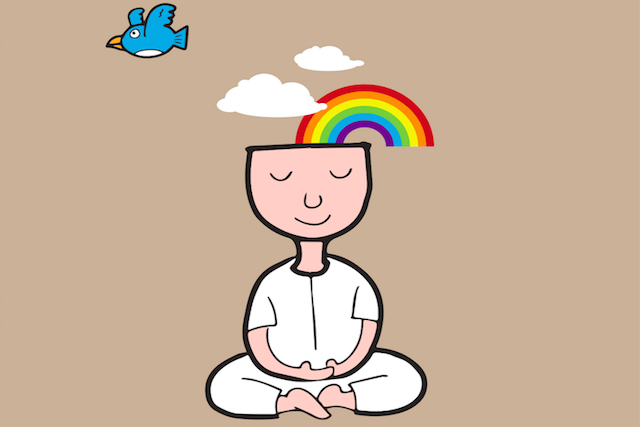
“Enlightenment is a destructive process. It has nothing to do with becoming better or being happier. Enlightenment is the crumbling away of untruth. It’s seeing through the facade of pretense It’s the complete eradication of everything we imagined to be true.” ~Adyashanti
I don’t know exactly when it happened.
It was probably about eighteen months ago, maybe a couple of years. I can’t really remember, and it doesn’t really matter.
I was up to my neck in stress, and having one of those days.
It was one of those days where you wake up late and your neck is a little stiff. One of those days where you skip breakfast, and you immediately feel that you’re behind schedule on every little piece of work. Where you have calls that you’ve forgotten to make, and emails that you’ve forgotten to send. One of those days where you know there’s no way you’ll have time to go to the gym later, even though today’s the day you need it the most! Just one of those days.
So I got home from work, sat in my meditation chair, and tried to calm myself down. But the stress and the frustration weren’t going anywhere. I wasn’t going to simply breathe it away.
As I sat there, struggling to relax, I found myself more and more wound up, until a deep pressure was gripping my forehead. Suddenly, in a split second, I just let go, and the flood gates poured open.
I let go of wanting to solve any issues in my life. I let go of trying to be calm, or trying to be stressed. I let go of trying be happy, I let go of trying to be sad. I let go of problem solving, and I let go of ideas of procrastination.
It wasn’t the kind of letting go where your mind subtly grips onto something else. The kind of letting go when you scream “I just don’t care anymore” but you know you’re now just holding onto the idea of “not caring.”
It wasn’t that. It was just… letting go. And I realized at that moment that all my worries were tangled up this thick web of beliefs I had about what I should have been experiencing.
See, it sounds like a cliche, and maybe it is, but I realized that I didn’t need to get anywhere. Exactly where I wanted to be was hidden behind layers of beliefs. It was cloaked behind a thick forest of shoulds and should-nots.
But as much as I’d heard this before, it wasn’t until I was actually able to give in that I could start to clearly see the unconscious beliefs that had been getting in the way of my inner peace.
To some extent, everyone seeking change and peace are initially guided by ideas. But I’ve come to realize since then that the real change happens when you let go ideas, as opposed to following new ones. After a long process of meditation and journaling, I found that the nine beliefs l describe below are what we often hold onto unconsciously.
I also came to the understanding that training my mind to “be present” or “be calm” could only get me so far. While I had many fleeting moments of peace, they often felt as if they came on top of a background of noise and confusion.
When I started to let go of these ideas, the inner peace became the background, and the noise became what would visit and leave.
Here are nine unconscious beliefs about life that get in the way of our inner peace.
1. “I need to be doing something right now.”
This is an incredibly subtle belief that most of us don’t even realize we are holding onto. It stems from our obsession with productivity and achievement, and it manifests as a constant, itching discontent.
Though our ego tricks us into believing we need this feeling to get things done, when we can let it go we see a lot of our anxiety dissolves and our relaxation deepens. We’re also much more likely to enjoy what we need to do without the constant internal pressure of feeling that what we’re doing in this moment is never enough.
2. “When I get what I want I will be happy.”
This is another cliche that I’m sure most of us are aware of. But despite acknowledging that we don’t need to get anything to be happy, it’s easy for us to get caught up in the chase.
To overcome this, we need to be mindful of when we have the feeling that we need something before we can be happy. When we see we’re doing this we can practice letting go of that need, even if only for a brief moment. The more capable we become at doing so, the more we will naturally experience happiness in the present, and the less our minds will fixate on ideas of the future for fulfillment.
3. “Finding inner peace is difficult.”
This is another myth that gets in the way. Many of us feel that we are far from inner peace, and we idolize those who seem to have found it. Because of this, we unconsciously believe that it’s a long way away from where we are in our lives, and we need to go on a long journey to find it.
Maybe we’ve read books that suggest that fundamental change in how we feel or act takes years of difficult training or some sort of pilgrimage. But often it is letting go of the belief that what we want is so far away, and understanding that when you stop striving so aggressively you will start to see the calm you’re looking for. It is this process of turning your beliefs upside down that becomes the journey in itself.
4. “If I express my emotions honestly people will think I’m weak.”
We’re often taught, as we grow up, to keep a lid on our emotions. This is common for responses that are considered socially inappropriate such as anger, fear, and sadness. Though in many ways we’re also taught to limit how much we show our positive emotions such as joy and excitement. This leads us, in adulthood, to believe that honest expression will be met with disapproval by others.
The irony in this is that as everyone is dealing with the urge to be authentic, those that actually do so are often met with respect and admiration.
5. “If people knew the real me, they wouldn’t like it.”
This is similar to the issue we have with emotional expressions. We hide certain aspects of our personality, defining ourselves publicly by what we show and privately by what we’ve hidden. The reality is that you are a lot more than either of those stories, and people will gravitate toward the real you because they appreciate honesty.
6. “I should be happier right now.”
In our culture, we fixate too much on social comparisons between individuals. When we don’t feel good, we look at what we have and feel guilty for not being happy enough. Or, we look at what we don’t have and wonder why we’re not as happy as the next person. Happiness isn’t something you need to have all the time; it comes and goes, like any experience, but it’s not a prerequisite for being human.
7. “Not being the best me isn’t good enough.”
There’s been a huge movement in the last twenty years toward personal development. Though a lot of these ideas are healthy, they can be driven by toxic motives. Most people don’t feel they need to better themselves out of a genuine need to improve their community, but out of the feeling that they’re not good enough in the first place.
When you can strip yourself of this idea you’ll soon realize that the chase to being your best self is infinite and anxiety-inducing. You’ll see that you can love and appreciate yourself now, as you are, without needing to be someone else before feeling okay.
8. “I owe the world.”
This is a tough one and is related to the feeling of needing to be your best self. Though gratitude is important, it doesn’t mean we should walk around with the feeling that we’re in debt to the universe. We see this when people pathologically try to prove their worth to others. When we let go of the deep feeling of debt and obligation, we can then really start to give people what we have to offer.
9. “There was a time in my past that absolutely sucked.”
Often we become so identified with bad times in our past that they get in the way of us enjoying the present. We define ourselves with these past experiences and feel they we need to share them with everyone we know before they know the real us. But when we come to realize that they are far less significant than we initially thought, we stop feeling like imposters and we let old memories fall away.
—
Many of these beliefs still come up in my day to day life. Sometimes when I start getting close to new people, I have the feeling in the back of my mind that they don’t know me until I’ve retold them a series of clips from life story. I understand though that these stories aren’t who we are in this moment. What other people think of us and what we think of ourselves is constantly changing.
Other times I find myself tired, or sick, and there’s an itching feeling that I should be happier, or I should just be doing more with my time. And like many of us, I still need to work on expressing my emotions honestly, without the fear that others will see it as a weakness.
All of this is okay. These beliefs took a lifetime of conditioning to cement themselves in our minds, so it’s only right they should take a little time and effort before they’re able to be completely let go.
Fortunately these constructs don’t have the same kind of grip over my psyche that they once had. In time, my anxieties have started to fade away and I’ve been able to ruminate less over unnecessary questions.
What do you think about these unconscious beliefs? Have you had any experience with them? I’d love to hear from you. Share your thoughts in the comments!

About Benjamin Fishel
Ben Fishel is a writer and co-creator of Project Monkey Mind, where he helps solopreneurs and young professionals take control of their minds, smash through their limitations, and lead a life worth living. If you’d like to improve your productivity and wellbeing, grab their free eBook: MORNING MASTERY: The Simple 20 Minute Routine For Longer Lasting Energy, Laser-Sharp Focus, and Stress Free Living."
Get in the conversation! Click here to leave a comment on the site.
The post 9 Beliefs You Have to Let Go If You Want to Find Inner Peace appeared first on Tiny Buddha.
from
https://tinybuddha.com/blog/9-beliefs-you-have-to-let-go-if-you-want-to-find-inner-peace/
Wednesday, 20 December 2017
An Improbable Story of Healing and a Girl with a Wand

“I’ve learned that people will forget what you said, people will forget what you did, but people will never forget how you made them feel.” ~Maya Angelou
It’s the worry, I think. The constant worry. Is she safe? Will she make the right choices? Will she find a young man that will cherish and support her? The worry is always there. It never leaves.
She recently visited Los Angeles for the first time. A business trip. She had a few hours to kill. What to do? The Wizarding World Of Harry Potter! The girl is not shy. Flying solo would not be a problem.
Later that night I get the call. The hot topic was how to properly pick out a wand. She even texted me a visual aid. And apparently, she’s a Ravenclaw. A “sorting hat” made that determination.
I could have sworn she was Gryffindor!
Yep. Two nerds. Later that evening, I get another text, “Goodnight, Old Man.” I respond with, “Goodnight, Dweeb.” Our banter always brings a big smile to my face.
The thing that hit me so hard about that conversation was her innocence. She’s twenty-seven years of age and yet that precious part of her remains.
My armor is old and unyielding. Well worn from decades of struggle. But with her, all that melts away.
Her innocence brought tears to my eyes. Like a toddler falling for the first time. A primal flood of emotion. The kind you can’t run from.
I was never supposed to have a twenty-seven-year-old in my life. It was never supposed to happen. Now what? I mean, okay, fine, feel the feels. But this went way beyond emotions. Feelings.
I had become a role model. A guardian of sorts. This was never supposed to happen. Not to a guy like me. I was cut from a different cloth.
My father’s version of parenting began with a right hook and ended with bruises. His rage, the look in his eyes, was terrifying. And my mom, in spite of her good heart, was an alcoholic nearing the end.
She died of cancer when I was just twenty-eight. Ten years later, my father passed. I got the news from Google. A random search done on a whim. I had not seen him in over twenty years.
This was my life. The only life I had ever known.
Losing my mom was tough, for sure. But more than anything, it was a relief. I know that sounds horrible but it was. Even more so with my dad. I was finally free. The burden had been lifted. The darkness was no more.
That was the cloth I inherited.
So I had to go it alone.
I would make my own luck. I would craft new DNA. Whatever the price, I was willing to pay it. Which helped me to break down walls. Healing? Not so much.
By age thirty, I was making six figures without a degree. I’ve run ad agencies, been a top-tier management consultant. I’ve directed and produced two short films and a play.
I rose above the right hook.
I rose above the mother that was never there. I rose above the odds that predicted my doom. Which brings us back to the spirited young lady in my life.
Brooke had wrapped up college and was about to enter the workforce. It was not going well. Friends suggested a trade agreement. Brooke’s legendary organizing skills for a few coaching sessions.
No big deal. A little pro bono work.
A few months in, her walls collapsed. All the pain and fear. Years of struggles. Tears running down her cheeks. There she was standing before me. All of her.
It took me a few days to process everything. Being a caretaker? To a twenty-two-year-old girl? The Universe was clearly stoned. How else to explain it? I had no answers.
But as each day passed, my resolve deepened.
Someone had to stand up for this girl and that someone had to be me. Because, you know, an almost fifty-year-old single man, mentoring a single twenty-two-year-old girl, that doesn’t throw up any red flags!
My life is rarely boring.
I still believed this would be a no-brainer. Easy breezy. Provide some counsel. Buy an occasional lunch. Help Brooke on her journey.
Like I said, no big deal.
Our brokenness is always there, beneath the surface. Stirring. Churning. Waiting to heal. It just takes the right set of ingredients. The right circumstances.
For me, that was a 5’4” twenty-seven-year-old with a Harry Potter wand in her hand.
It’s actually kind of perfect, given the people involved. As the years passed, the trust between us grew. And she started opening up. The real stuff. Career. Boys. Life. Roommates. Money. Insecurities. We talked about everything. Still do.
Which included calling her out when need be. That always felt odd. She’s not my spawn but at times, I seriously have to wonder.
I took all the calls when her world collapsed. I occasionally cooked her breakfast, which included insane amounts of bacon. We started going to movies and just hanging out.
And more of my armor fell. Piece by piece.
And more her armor fell. Piece by piece.
Then I noticed something. Several somethings, actually.
She was doing a lot better. She was growing into a confident, successful young woman. And she would emulate me. Which was kind of crazy. And totally awesome.
I had to be a legit role model. Holy crap!
And then the check-in phone calls and texts started happening. She needed a comforting voice. My voice. I had become that voice. Wait! What? When did that happen? And wow, that happened?!
It was all very humbling and beautiful.
When the holidays rolled around last year, we decided to meet for breakfast and exchange gifts. Kerbey Lane, an Austin favorite. It was my turn to rip open presents.
I knew it was a book. You always know when it’s a book. But this was no ordinary book, this was Tsugele’s Broom, a favorite from her childhood.
And it came with very specific instructions.
The book told the story of an independent young woman in search of a good man. Brooke’s instructions were simple. When I believed she had found such a man, I was to return the book.
What the hell was happening? More tears welled up. Is it always like this?
I was suddenly overcome by a profound need to immediately hug her. Unfortunately, that almost resulted in me knocking over our table. A gymnast, I am not.
A few people looked up. I blushed. She had a good laugh.
This young woman. This dweeb.
I love her so very much. And I worry.
Adulting. Right?
Wow, that’s happening.
The right-hook childhood. The dark trauma of my youth. All that stuff is slowly healing. Beneath the surface. The deep kind of healing. A soul scrub of sorts.
And so it is with her.
I get to watch that happen. I get to be a part of that process.
Because as it turns out, I am cut from a cloth that can protect. I am cut from a cloth that can love and not abuse.
That is the cloth I wear now.
And it took a Ravenclaw for me to see it!
Which is not to say that it’s all roses. There is still work to be done. And we’re finding those answers together. One moment at time. Two imperfect nerds finding their way.
A middle-aged man. A twenty-seven year-old-girl with a wand.
In this life, I got to be an almost dad.
Ya know?
It’s kind of a big deal.
In my final moments, whenever they may come, I’ll remember Brooke’s first tears. The tears that called me out. And the fact that I answered that call.
There is so much more to you than you could ever realize. Seriously. It’s true. So answer the call. Whatever that may look like for you. Answer the call.
Find the cloth you thought impossible to wear.
Because it’s down there. Somewhere.
Keep looking.

About Bob Olmstead
Bob Olmstead is a brand strategist and success coach that will help you unlock the Secret Sauce that will set your business or personal brand on fire! It's human journey and that's a good thing. Your greatest competitive asset is your passion and commitment. He offers a free initial brand assessment to get you started at bobolmsteadink.com.
Get in the conversation! Click here to leave a comment on the site.
The post An Improbable Story of Healing and a Girl with a Wand appeared first on Tiny Buddha.
from
https://tinybuddha.com/blog/an-improbable-story-of-healing-and-a-girl-with-a-wand/