Tuesday, 3 October 2017

Decluttering Your Digital Life

Sometimes a blog post is inspired by something we are doing here, and this is one of them. As our business grows and our team grows, we are feeling the need for some organization in-house. There is no better way to recognize a need than to sit down and teach someone how things are done. So often we “just know” things and when we have to explain them to someone else, we realize that there are opportunities to simplify, organize, and streamline. Here are a few tips for organizing your digital life that we have learned from and want to share with you!


Time. TIME. Time. The process of getting from Point A to Point B in your eLife, is going to take some time. We know you love time-blocking so allow yourself some nice big chunks of time to work. You might even try to assign yourself start-to-finish tasks within your schedule. For example, if you know you have Monday from 2-3 pm, assign yourself task that can be finished during that time. So on Monday from 2-3, I am going to organize my 2016 photos. This is important stuff and the time you give yourself now will save you later.


Plan it out. I know…of course we would say this, right? Create a roadmap for how you will accomplish your digital declutter. Think about what will work best for you when organizing files. Does it make sense to organize by date? By subject? Start high-level and break it down. Draw it out!

Stick to the plan. Whether it is a naming scheme for photos, a folder structure for email, or a cleaned-up desktop, be absolutely vigilant when it comes to maintaining what you’re working towards. Create a “cheat sheet” for things like naming structures and keep your roadmap visible so you can access it easily and remind yourself of what you are working toward. 

A good digital declutter is worth every minute of effort. We think you’ll find the things you do in your electronic life will take less time and less frustration. Let’s hear it for the highly efficient HUSTLE!


from STARTplanner - News https://startplanner.com/blogs/news/10-3-decluttering-your-digital-life

from
https://startplanner.tumblr.com/post/166004962068

Kaizen: A Simple Way to Supercharge Your Freelance Career

Monday, 2 October 2017

Overcoming a Negative Body Image: 4 Things to Remember

TRIGGER WARNING: This post deals with an account of anorexia and may be triggering to some people.

“You will never be free until you free yourself from the prison of your own false thoughts.” ~Philip Arnold

I really don’t remember my life before anorexia. I think back to my early teenage years when I ate peanut butter sandwiches and drank hot chocolate without a single thought of how many calories I had consumed. There was no guilt, no worry, no need for perfection. How I wish I could get those carefree moments back.

A few years ago anorexia completely distorted my perception of myself. All it took was one seemingly innocent comment from my classmate: Haven’t you gained weight recently? From that moment on, I no longer saw a healthy, fit person when I looked into the mirror. All I saw was an imperfect body.

Meticulous calorie counting, diet restriction, and exercise time logging began to fill day after day. I wasn’t living as a human, but rather as an engineer treating my body as a machine. I loved myself for every pound I lost, every piece of clothing that felt a bit looser, and every little bit of food I managed to leave on my plate.

I felt like a crazy person because my reasonable self knew that I shouldn’t be starving myself and exercising ridiculous number of hours every single day. I knew exactly what was wrong with me except there was nothing wrong.

Somewhere in the evolution of the illness, I lost control. I ate one apple a day, drank only water, ran ten miles every morning, did squats and push-ups while studying, and paced in my room instead of sleeping. Nobody asked any questions, so I didn’t provide any answers.

And then one day I was finally rewarded with my target weight glowing on the scale. I had done it! The hard work had paid off and I was free. Or so I thought. The control I now had over my body was deceiving. Once I reached my target weight, I couldn’t stop. The rush was too inviting. Every extra pound lost felt like a victory.

You Don’t Notice You’re Losing Control Until It’s Lost

When I looked into the mirror, I saw my ribs with their thinly stretched coating of papery skin, and every single hump of the spine as I bent over. People began to whisper. The doctors told me that I wouldn’t survive if I didn’t start eating. But I was proud. Every comment about how skinny I was felt like an accomplishment. My insecure self was at rest only when I met all so high standards I set for myself. It felt like a prison I couldn’t get out of.

The prison was in my head. If at some point I was controlling everything related to food and body image, now I had lost control and the illness controlled me.

I was hungry, cold, tired, and unable to pick myself up. The voice inside my head was telling me that nothing I did was good enough. If I ate a salad, I shouldn’t have had it. If I went for a walk, I hadn’t walked far enough. I pushed my body to the point that I collapsed.

Since I’m at a healthy weight now, people ask me how I overcame anorexia. The truth is that the recovery didn’t happen overnight, and not without relapses. It took a lot of tears and struggling, but eventually I stopped drowning. I chose to step out of my self-imposed prison, with the help of friends, family, and a counselor.

I was fortunate enough to have the support of loving parents who were there when things were hard, when I wanted to give up because I felt too fat, when I needed somebody to remind me that recovery was worth it. And more importantly, that I was worth it.

It was a taxing mental battle that still at times rages within me. The old eating disorder voice creeps up sometimes, but I now recognize that voice as irrational and destructive. I’m learning to ignore it. I’m learning to quit running away from myself.

4 Things to Remember When You’re Under the Spell of a Negative Body Image

Negative thoughts about your body consume you. They take and take and take. To recover, you essentially have to figure out who you are again. You have to build yourself up from the smallest bits of what you know of yourself. You have to differentiate yourself from the condemning voice. Here are some of the things I learned (and had to embrace) on my way to recovery.

1. Not all thoughts are facts.

The problem with a negative self-image is that it feels like a fact. You can easily convince yourself of something that is not true. Even at 5’7” and my lowest weight (ninety pounds), I believed that I needed to be thinner.

I felt that my waist wasn’t slim enough, my arms weren’t toned enough, and my thighs weren’t narrow enough. My mind was a very thorough liar, and there was nothing anyone could say to convince me otherwise.

If I hadn’t learned about these lies and how to discern them, I would probably never have gotten out of that vicious cycle.

You might have a hard time discerning truth from lies in the beginning, so instead of questioning whether your thoughts are facts, ask yourself which ones serve you and which do not.

Growing up with an athletic sister, most of my negative thoughts evolved around my body. I could objectively say that although I was very thin, I wasn’t particularly lean. So I signed up for a gym membership and started lifting weights.

However, what was initially a constructive thought—that it would serve me to build muscle—turned into an obsession within a few months.

I remember standing in a basement gym, pushing a heavy barbell above my head, when I realized I was crying. I let my tears roll down my cheeks and focused back on the barbell. I had to finish my workout. I was exhausted and hungry from all the workouts I put my body through every single day, but all I could think of were toned arms and washboard abs.

I think I knew long before that day that my desire for a lean body was no longer serving me. However, I couldn’t stop exercising. I had to sweat. I had to feel my heart race. My life revolved around my fitness routines.

I knew then I needed to challenge the thoughts that told me I wasn’t lean or fit enough, and adjust accordingly.

That isn’t to say that I stopped working out altogether. There are days I still experience anxiety when I know I won’t be able to get to the gym. But any time a destructive thought about my not-so-toned body pops up, I remind myself this doesn’t serve me and do my best to let it go and focus on something more positive. I may not have the leanest body, but I am more than just my physique.

2. Absolute control is an illusion.

Eating disorders are all about control. Control issues with what goes into your body and what comes out of your body. It’s about exerting control over at least one aspect of your life. However, it’s an illusion. In fact, you may feel in control, but be very out of control. The more successful you are at exerting control over how much food you take in, the less control you actually have. The eating disorder and twisted ideals are controlling you.

Right before I hit rock bottom, I was paralyzed with fear and crippled with anxiety. I needed the eating disorder. I needed the identity and illusionary control it gave me. If I felt I got everything under perfect control, I felt strong. Paradoxically, that’s when I ended up under the doctors’ and my parents’ supervision, with no control over my food intake.

Letting go of control was the hardest part. I would be lying if I said I no longer struggle. However, I’m much better at reminding myself that the greatest control is in letting go of the need for it.

3. Perfectionism is unattainable.

Perfectionism goes beyond doing your best. It’s about setting extremely high standards that are unrealistic. In my perpetual quest for perfection, I believed I could meet those high standards. I strived for perfection in my studies, relationships, cleanliness, exercise, and diet. Mediocrity was unsatisfactory. It was all or nothing.

Perfection is so addictive because it locks you into thinking that if you do everything perfectly, you can minimize the feelings of pain and judgment. But the truth is, you can’t. There will always be people in your life who judge you no matter what you do or what you say.

The one thing you can do is to surrender. Accept that you are work in progress. Embrace all parts of yourself, even those that seem “imperfect” to you. Practice forgiveness and self-compassion. And most importantly, be patient. Adopting new patterns of thinking takes time, but the work is worth it.

4. Food isn’t the enemy.

The difficulty with negative body image is that it’s closely tied to weight (and therefore, food). But unlike a drug addict, you can’t avoid the trigger. You can’t simply avoid food for the rest of your life, although it is very tempting to adopt the mindset that the fewer calories you eat, the better.

In that sense, healthy eating literally saved my life. Fueling my body with simple whole foods shifted my focus from calorie counting to nourishment. Instead of weighing myself several times a day, I focused on my health.

At times, I still pay attention to how my clothes fit and how I look in the mirror, but food is no longer the enemy. It’s the means to achieve the good health we all find so radiantly beautiful—glowing skin, shiny hair, and a fit, strong body.

Silencing the Voice

Do I still struggle at times? Yes. However, when my negative thoughts and struggles reappear, I no longer let them run my life. I recognize them as something I must overcome. There are days that I have to make a conscious effort to eat and not panic when the scale shows an increase. But thankfully, I know the price of letting fear take over my life.

I know that one day I’ll be able to step on the scale and not cringe at the numbers that appear in front of me. One day, I’ll be able to eat a meal without thinking about calories. One day, my mind will be completely free. Until that day, I keep silencing that voice.

About Petra Scott

Petra Scott is a Registered Holistic Nutritionist and a Raw Food Chef who helps women build a foundation of wholesome eating to create a strong self-image. Get her free Health Mastery Toolkit to discover your ideal diet and take your health to the next level.

Get in the conversation! Click here to leave a comment on the site.

The post Overcoming a Negative Body Image: 4 Things to Remember appeared first on Tiny Buddha.


from
https://tinybuddha.com/blog/overcoming-negative-body-image-4-things-to-remember/

How to Increase Business Efficiency In Print Marketing

When all businesses are moving online and making it their prime source of business, print marketing gets left behind. People have been putting too much effort on technology that sales and marketing in this niche have been ignored for long.

But, let me ask you this: Don’t you think it’s time to reconsider print marketing? After all, it’s still one of the best businesses around.

Technology is very important for any online business but your business growth starts with your customers. If you do not have customers, how are you going to run the business? A web to print solution’s success depends entirely on customers. Here customers are of two types- a) your existing customers and b) customers you wish to acquire.

To target both these customers, you need a planned marketing move or strategy. Think of this as a “new service” you wish to market. You could pitch the features to your staff first and then your customers to see what they have to say about your “new services”.

Here are a few web-to-print solutions marketing tips you can use to make your business more efficient.

Using Target Marketing Strategy

When you plan a marketing strategy, you also plan whom you are going to target. You need to define your audience in advance in order to achieve the best results. Using target marketing gives you a clear picture as to whom you should target and how.

Most web-to-print solutions marketing strategies fail because they are not sure who to target and they end up pitching to the wrong group. This wastes both money and time.

Once you have defined your audience, you need to know what you want to pitch to them. Not all customers will want every service or product you sell, so you’ll have to do research to find out what interests them the most. The way you segment your customers will allow you to market your products in the best possible way.

After that, you need to set your business goals. They need to be realistic for you and your team. Like keeping a track of the first order in the system, this will keep your team on their toes to get their first order in the system.

Marketing success is way different from technical success. Here’s how:

With technical success, it means you have successfully implemented the system. If your marketing strategy is a success, then it means you and your business is growing.

Using Branding as a Marketing Strategy

brand marketing

Every business has a name, so choose one that can easily make you and your business more popular. A smarter way to choose a name is to pick something from your internal projects.

This is called Branding. It’s a type of marketing strategy that will let people know about your business and what it can do for them.

See Also: 5 Smart Ways to Boost Brand Awareness

Don’t Sell Without a Story of Your Business

How you started, when you started and what made you start your business is very important. What you sell and what you do not sell are things that are necessary for your sales and marketing team, too.

As much as possible, never let your sales team go out without a story because they might end up making one of theirs and this can get you in trouble. A story is a good way to market your business and the services it provides.

In addition to that, you also need a plan on how you can tell the story. You need to say it in a way that matches the demands of your target customers. Therefore, you need to play a clever and smarter game here. You need to do branding in a way that you tell them how your solution is going to benefit them. Never tell them what features your business have. Instead, tell them how those features are going to help them.

Like most customers, I would not be bothered to know about you or your business. My prime concern will be how your solution will benefit me. That has to be your focus when you are creating a brand.

Know Your Customer

You should know your customers before they know you. You have to identify their needs and understand the solutions they are looking for. Apart from that, you also have to know when they’ll need you and you must have offers ready by that time.

Using Social Media as Marketing Strategy

social media marketing

A third of the world uses social networks regularly. Hence, it is one of the best marketing tools around. This is why most marketers are expanding their business widely using social media.

Why should you focus on Social media marketing? The stats below will give you a clearer picture.

See Also: The 5 Internet Marketing Trends That Will Dominate in 2017

Some Facts

  • Around 72% of people who use Facebook are adults.
  • 74% of people use Facebook for professional use.
  • Facebook has the most engaged users with 70% daily log.
  • 59% of Instagram users are on the platform daily, including 35% who visit several times a day.
  • In the past two years, people who use LinkedIn has increased 21%.
  • Instagram has 500 million monthly active users.

In the print industry, the same ideas follow. You can target group of people from different regions and different age. You can attract customers by creating attractive ads on these social media platforms.

Your marketing move is very important. You need to decide how and what has to be your next move to achieve your customers’ goal.

Conclusion

Print Industry is huge and when you take web-to-print solution, then you need to have a proper marketing strategy in place so that you can collect more customers. Your prime goal needs to match the customers’ demands.

Promoting something you know the customer has been looking for will fetch you results that are more positive. Hence, keep your target audience in mind, use branding and sell solutions or features while keeping in mind what your customers want. This will be a great success for your print business.

The post How to Increase Business Efficiency In Print Marketing appeared first on Dumb Little Man.


from
https://www.dumblittleman.com/print-marketing/

9 Hacks to Help You Write Killer Content

Knowing how to write quality content is not easy.

Most writers are not able to create good content which can hold readers’ attention. Some writers are too bothered about writing perfectly. Others tend to overlook quality and compensates for their lack of skills by writing extremely lengthy articles.

There are only a few who knows how to write quality content and those people can really create a difference for their audience.

If you are aspiring to improve your content, here are 9 hacks you can use:

Keep it Simple

Interestingly, readers can only concentrate on a piece of content for a very short period of time. Their attention span is so limited that your content must be relevant, concise, and devoid of metaphors to avoid losing their interest. For those who are passionate about writing, this can be a challenge.

Most readers are not likely to read the entire content of a page. Most of the time, they only want certain information and they want to see that quickly. When your reader can’t find that information within a couple of seconds, he leaves the site and never returns.

So, the trick to creating killer content is to use short, precise sentences, and short paragraphs. You can use the free Hemingway app for help.

See Also: How To Avoid A Content Crisis When Your Deadline Is Looming

Inverted Pyramid

While some readers are only interested in the hard facts, there are others who desire to find more information. However, no reader is going to be patient enough to scroll up and down a blog to get that.

So, it is wise to use the inverted pyramid in your content. Position key facts in the first paragraph and the not-so-important ones in the subsequent paragraphs. You can watch this clip to find out how you can do that:

Talk about Benefits

Instead of highlighting the features of a product that you want to sell, you must focus on the benefits the reader will get from it. A reader is at your website to get some new information or to solve a problem.

All they want is access useful information fast and you’ll need to create catchy headlines to attract them.

Create Catchy Headlines

An easy tip to create killer content is to make your headline eye catchy. You should keep it direct and without ambiguity. When you keep your headlines this way, your readers will know exactly what they’ll find in your article. They’ll be tempted to read the whole blog.

Designing Call-to-Actions

write quality content

Once you have a dedicated group of readers, you must try to get them to act. For this hack to work, you will need to generate a feeling of urgency. Unless the reader senses this urgency, he will not fall for it. You must also realize that you have to work hard to make them convert because it’s not going to happen by itself.

Use the Right Keywords

The best way to showcase your content is to focus on SEO techniques. You have to know how to insert the right keywords in your content as well as appropriate links to other articles on your website.

Initiate Social Discussions

You can generate killer content by crowdsourcing your opinions on social networking sites like Facebook and Twitter. You may ask a pertinent question to see the kind of reactions it evokes.

social media

You may even embed these responses into your blog. You can call for discussions by sending links to your original readers and share these further to create a debate-like atmosphere. This will mean more publicity for your post.

Interviews with Clients

When you interview some impressive clients and get them to share their experiences on Skype, for instance, you can generate a lot of interest among readers. You can embed call recordings as YouTube videos or get them transcribed for your readers.

You can also get others to write guest posts for you. This can add more value to your site and it can keep content creators coming back.

Use WordPress Plugins

There are as many as 40,000 plugins you can use for your site. These plugins can help you create killer content, which you’ll find hard to do on your own. You can create more quality content using those tools.

The Word Stats tool, for instance, gives you a range of tools to enhance content quality. The Editorial Calendar plugin lets you manage content better and the WP Keyword Suggest lets you insert the best keywords. Easy Content Templates plugin helps you create new posts faster while the Search Everything plugin lets you locate past data as you build new content.

See Also: 8 Common Content Marketing Myths You Should Stop Believing

The post 9 Hacks to Help You Write Killer Content appeared first on Dumb Little Man.


from
https://www.dumblittleman.com/how-to-write-quality-content/

Sunday, 1 October 2017

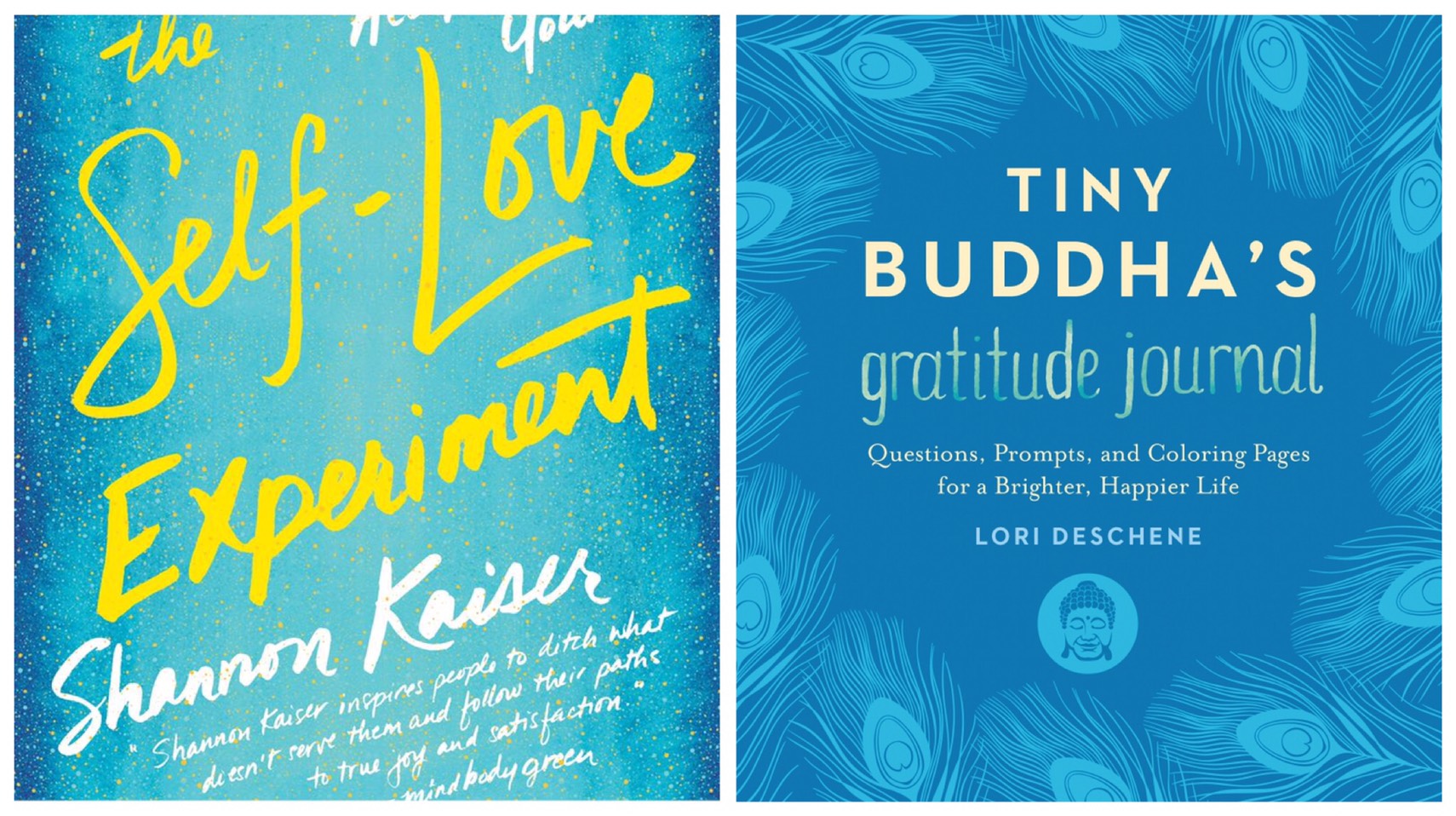
Book Giveaway: Tiny Buddha’s Gratitude Journal and The Self-Love Experiment

Happy October, friends! Over the past several months since I launched Tiny Buddha’s Gratitude Journal, I’ve been excited to receive some wonderful feedback on the thought-provoking prompts and questions, and the coloring pages.

I decided to create this journal because adopting a gratitude practice has been life changing for me; it’s shifted my perspective, boosted my mood, and enabled me to hold on to optimism during some of the darkest times of my life.

I chose to include coloring pages because I’ve been obsessed with adult coloring since it became a thing. Sitting with my markers and a book with intricate pictures or mandalas, I feel relaxed, completely focused on the present, and joyfully connected to the creative part of my brain.

If you haven’t yet picked up a copy—or if you’d like an extra for a friend—now’s your chance to win one.

And because the best gratitude practice is rooted in appreciation for yourself, I’m also giving away a copy of my good friend Shannon Kaiser’s new book The Self-Love Experiment.

About Tiny Buddha’s Gratitude Journal

This flexibound interactive journal includes questions and prompts to help you reflect on everything that’s worth appreciating in your life.

Sprinkled throughout the journal are fifteen coloring pages depicting ordinary, often overlooked objects that enhance our lives, with space for written reflection on the page.

Tiny Buddha’s Gratitude Journal will help you recognize your blessings, focus on the positive, and foster optimism so you can be your best, happiest self every day.

About The Self-Love Experiment

Whether you want to lose weight, land your dream job, find your soul mate, or get out of debt, it all comes back to self-love and accepting yourself first.

Shannon Kaiser learned the secrets to loving herself, finding purpose, and living a passion-filled life after recovering from an eating disorder, drug addiction, corporate burnout, and depression. She walks you through her own personal experiment, a simple plan that compassionately guides you through the process of removing fear-based thoughts, so you can fall in love with life.

If you want to change your outcome in life, you have to change your daily habits and perspective. Shannon takes you on this great journey into self-love and true self-acceptance.

The Giveaway

To enter to win a copy of Tiny Buddha’s Gratitude Journal or a copy of The Self-Love Experiment :

  • Leave a comment below sharing something you’re grateful for today or something you appreciate about yourself (or both!)
  • For an extra entry, share the link to this giveaway on one of your social media pages and include that link in a second comment

You can enter until midnight, PST, on Sunday, October 8th. Books will ship during the week of October 16th (as I’ll be on vacation before then).

If you’d rather not wait to grab both of these books you can find Tiny Buddha’s Gratitude Journal on Amazon here, and The Self-Love Experiment here.

FTC Disclosure: I receive complimentary books for reviews and interviews on tinybuddha.com, but I am not compensated for writing or obligated to write anything specific. I am an Amazon affiliate, meaning I earn a percentage of all books purchased through the links I provide on this site. 

About Lori Deschene

Lori Deschene is the founder of Tiny Buddha and Recreate Your Life Story, an online course that helps you let go of the past and live a life you love. Her latest bookTiny Buddha's Gratitude Journal, which includes 15 coloring pages, is now available for purchase. For daily wisdom, follow Tiny Buddha on Twitter, Facebook & Instagram..

Get in the conversation! Click here to leave a comment on the site.

The post Book Giveaway: Tiny Buddha’s Gratitude Journal and The Self-Love Experiment appeared first on Tiny Buddha.


from
https://tinybuddha.com/blog/book-giveaway-tiny-buddhas-gratitude-journal-and-the-self-love-experiment/

We Can Choose Different Ways Without One of Us Being Wrong

“You have your way. I have my way. As for the right way, the correct way, and the only way, it does not exist.” ~Friedrich Wilhelm Nietzsche

Many of us are committed to a journey of change and personal growth. While these are traits to be admired and celebrated, they can also have a darker side. We can become a little militant and dogmatic when we’re on our journeys.

As we focus on our attempts to make changes in our own lives, our views can start to narrow and become very black and white. We become so tuned into what we are doing that we forget there’s more than one way to do just about anything.

We seek out others that agree with us to back up ‘our views.’ This may be part of our primal wiring to be part of a collective. We seek a tribe.

Being part of a tribe can be intoxicating. Being with people that share our passion is exciting. It’s great to have a common goal or view and be able to talk about our passions with others that really get it. We’re all in this together.

Being in a tribe can also distort our perspective. Only seeing and hearing a biased view. Ironically, we can lose objectivity as we seek clarity. Becoming more rigid as we search for methods and hacks.

Or maybe we enjoy citing this study or that to ‘prove’ our point. Using science (bad science oftentimes) as our weapon of choice to make ourselves feel and sound knowledgeable.

Both these traits can lead to us becoming dogmatic, thinking our way is the only way.

A Personal Example or Two

I notice this habit of falling back on dogma for a good reason—I do it myself.

An example would be my approach to exercise.

I choose to keep myself strong with my own bodyweight (calisthenics). The ability to use one’s own body through space is impressive to me and I feel it’s the ultimate expression of strength. Not everyone shares this view of course. Many others enjoy hoisting large amounts of iron or swinging a kettlebell.

As I have deepened my own practice of bodyweight training and enjoyed the benefits it brings, I have also found myself judging the way others exercise at times. Shaking my head at people in the gym I perceive to be doing something silly or dangerous.

Another favorite, quoting from a famous fitness authority or studies to hammer home a point, perhaps how repeated loading of the spine with weights can have negative connotations. Or how balancing on a bosu ball has little carryover to anything other than balancing on a bosu ball.

Why do I do this? I’ve chosen my route, why do I feel the need to judge the way others choose to exercise? I’m certainly no expert.

Another example would be my journey into simplicity and applying 80/20 principles to my life. Several years ago I realized I was accumulating more in my life. More things that didn’t really matter to me or speak to me on a spiritual level. Life felt more complicated than I wanted it to be.

In response, I started to make some changes. It’s a journey I’ve documented previously on Tiny Buddha. The upshot of these changes has been that the quality of my own life has improved significantly. There is more focus and clarity in my life.

Along the way, as I’ve traveled further down the rabbit hole of simplicity, I find myself casting a weary eye at others oftentimes. Judging them for complicating things, or not grasping the power in simple, or for not saying no to commitments they have no capacity to keep.

None of this is useful to them, none of it is useful for my internal energy. Yet, still I have to fight this pull to judge. Justifying it somehow as me now knowing better. How arrogant and self-righteous this all sounds as I write the words, and for good reason—it is.

Your Journey is Your Journey

No need to complicate things. Personal journeys should be personal. Let’s be clear, we’re not in competition and even if we are, it’s with ourselves.

You can call yourself a minimalist if you like but owning less than your neighbor, but that doesn’t automatically make you a better person.

You can call yourself a mindfulness advocate and commit to daily meditation, but not everyone needs a formal meditative practice to be mindful. Equally, not everyone with a daily meditative practice is mindful.

You can choose to strengthen your body by lifting your own body if you like, but it’s fine if someone else chooses to push weights or rocks instead.

You can choose to follow a Paleo diet without bashing vegans, or vice versa. People can, and do, thrive on many diets as the Blue Zones around the world already prove.

You can choose to follow a religion that calls to you, but you can do that without damning someone else who follows a different faith.

You can choose to do all of this quietly in your own way. Or you can choose to share what you are doing with others in the hope of inspiring them to join you, or support you on your journey. If you share, let’s drop any degree of superiority or smugness. No need to hide behind dogma or use it as a weapon to fire at others.

Follow your passions in life, embrace them, and really enjoy them, but be aware that others are just as passionate about their passions. Leave the dogma behind and remember, there are many routes to the top of any mountain.

Note: This post is as much a reminder to myself as it is to you. I hope to rid myself of this affliction to hide behind dogma at times. If you notice me doing it, please feel free to remind me of these words. 😉

About Carl Phillips

Carl writes short books full of big ideas. He is also the proud owner of Frictionless Living which is focused on helping readers find and live their own version of a simpler, good, life.

Get in the conversation! Click here to leave a comment on the site.

The post We Can Choose Different Ways Without One of Us Being Wrong appeared first on Tiny Buddha.


from
https://tinybuddha.com/blog/we-can-choose-different-ways-without-one-of-us-being-wrong/